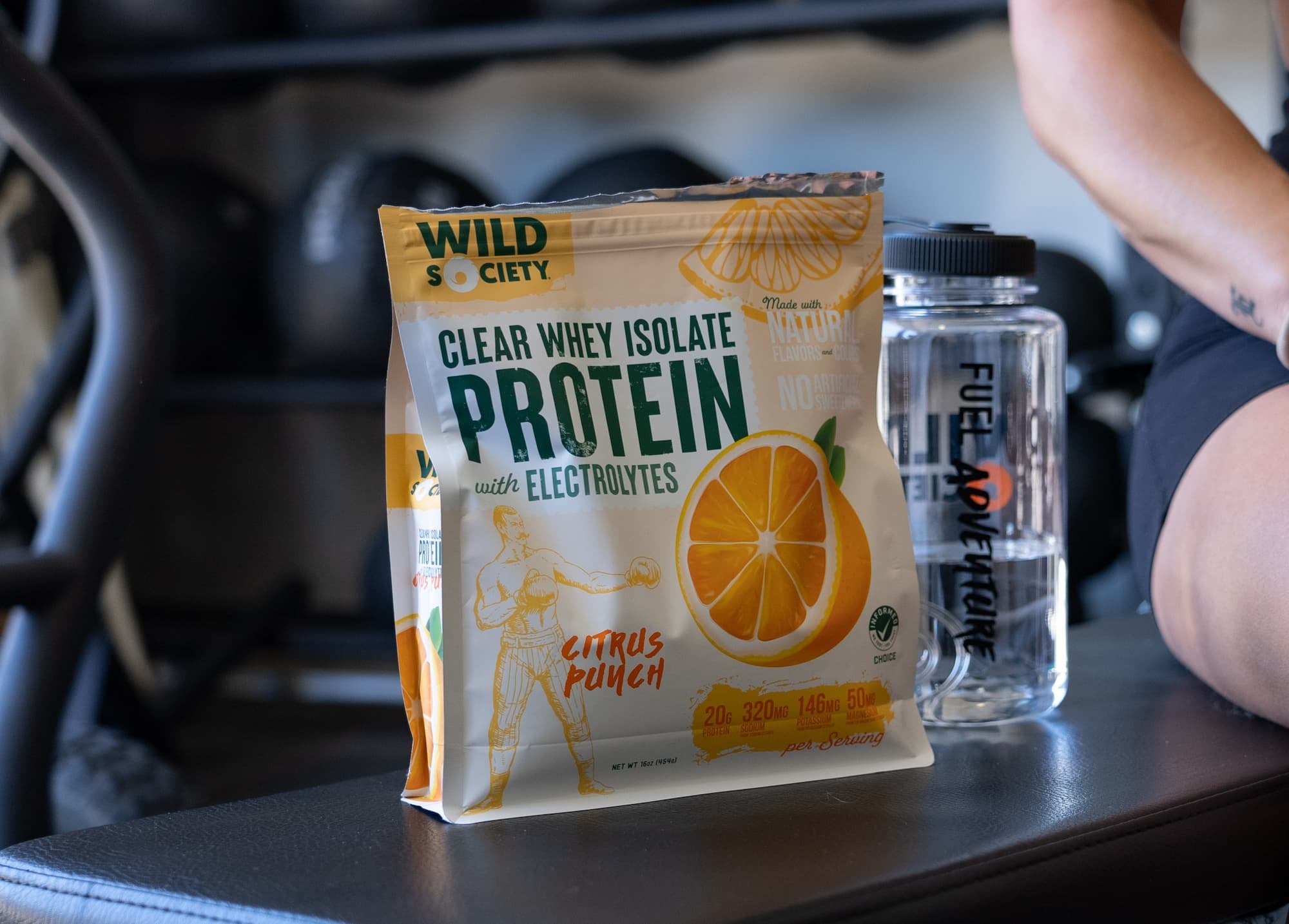
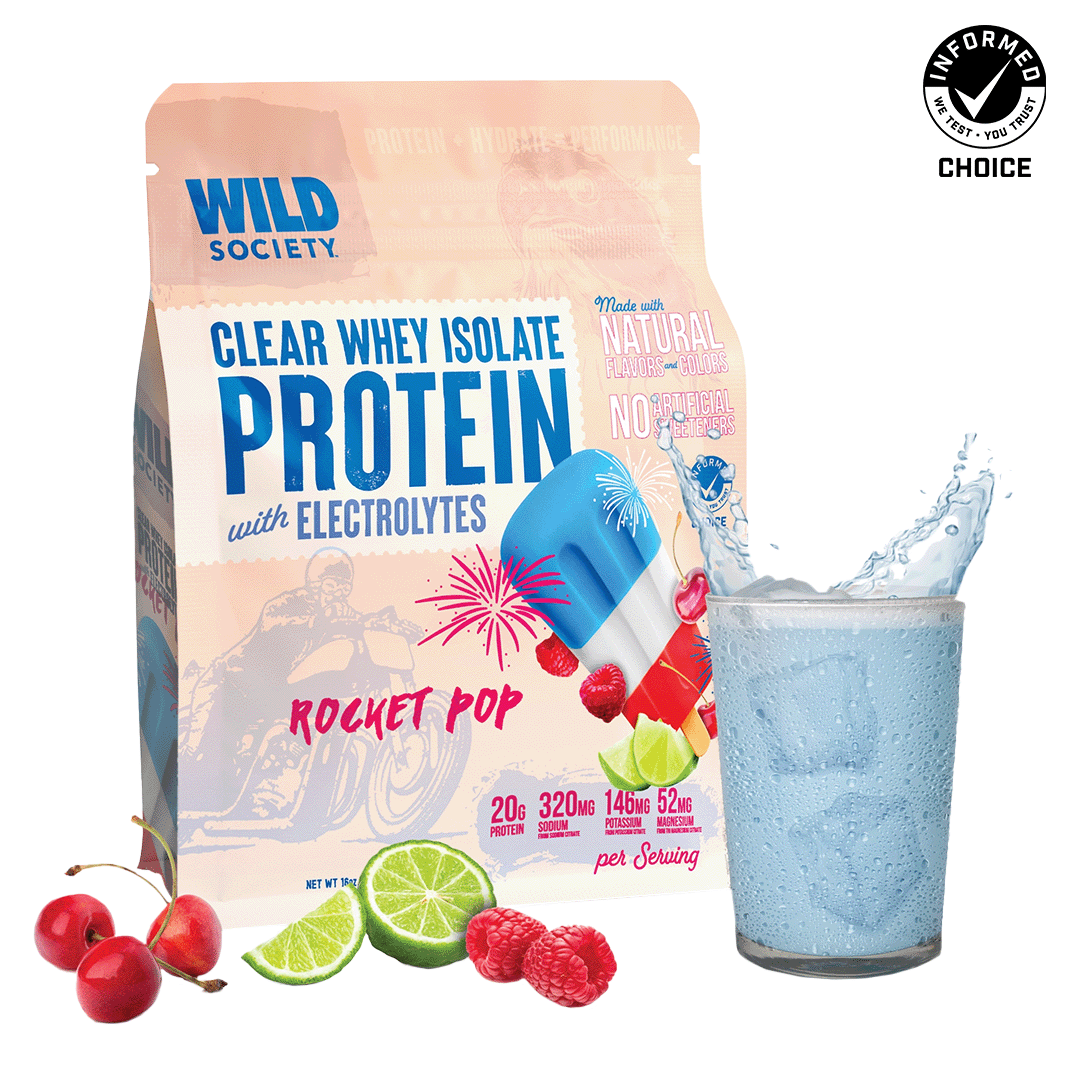
Protein water is a water-based protein drink with a lighter texture than a creamy shake. It may come as a ready-to-drink bottle or as a powder mixed with water. Many versions use whey protein isolate, but the protein source, serving size, carbohydrates, and added electrolytes vary by product.
The useful question is whether that format helps you meet a protein need conveniently. A clear appearance does not tell you everything about the nutrition, and “water” in the name does not mean the drink is plain water. Here is how to compare protein water drinks and choose between a powder and a ready-to-drink WSN bottle.
What exactly is protein water?
Plain water contains no protein. Protein water has a protein ingredient added to a water-based drink. Clear whey formulations use milk-derived whey protein isolate in a format designed to mix into a light, often fruit-flavored beverage. Other products may use collagen or a different protein source, so check the ingredient list rather than assuming the category is uniform.
Protein water and clear whey overlap, but they are not identical terms. “Clear whey” identifies a kind of protein formulation; “protein water” describes the beverage format more broadly. A ready-to-drink bottle can contain clear whey, and a clear-whey powder can become protein water when prepared according to its label.
The protein source matters. Whey supplies all nine essential amino acids. Collagen has a different amino-acid profile and is not a direct substitute for whey when complete protein for muscle support is the main goal. Clear appearance alone cannot show that difference. For the wider category and ingredient explanation, see our clear-protein guide.
Protein water vs a regular protein shake
The main practical difference is the drinking experience. Protein water is usually chosen for its light, fruit-flavored style. Creamy shakes tend to work better for people who want vanilla, chocolate, or a smoothie-like texture. Either format can contribute useful protein when the source and serving suit your needs.
Compare the drink, not just the name
| Feature |
Protein water |
Creamy protein shake |
| Typical texture |
Light and water-based |
Creamy or thicker, depending on recipe |
| Common flavors |
Fruit-inspired |
Vanilla, chocolate, and other shake flavors |
| Protein source |
Often clear whey isolate; check for other sources |
May use whey, casein, plant protein, or blends |
| Preparation |
Mix powder with water or open an RTD bottle |
Mix powder or open a prepared shake |
| Calories and carbohydrate |
Product-specific |
Product- and mixer-specific |
| Meal replacement? |
Not automatically |
Not automatically; assess the whole formulation |
A creamy texture does not prove a shake is a complete meal, and a clear texture does not prove a drink has zero carbohydrate or no milk ingredients. Compare actual labels. If you blend a powder with milk, fruit, or nut butter, those additions change the final drink substantially.
If thick shakes do not appeal after activity, a light protein drink may be easier to fit into your routine. That is a preference and convenience advantage, not proof that it hydrates every person better or produces greater muscle gains. For a closer comparison of whey formats, read clear whey versus regular whey.
How to choose a protein water
Check protein source and serving first
Find the protein ingredient, the grams of protein, and the serving size. For a bottled drink, confirm whether the entire bottle is one serving. For a powder, check the scoop weight and the amount of water in the instructions. These details let you compare products without confusing a concentrated scoop with a finished bottle.
If the goal is a convenient complete-protein addition, whey isolate is one option to look for. If a product contains collagen instead, evaluate it for that role rather than assuming it has the same protein quality. The amount that is useful to you depends on the gap left by your meals, not simply the biggest number available.
Read carbohydrate and sugar as separate lines
A drink can have 0g total sugars and still contain carbohydrates. That does not make the label contradictory; carbohydrate includes more than sugar. Use the total-carbohydrate line when that is what you track. Also compare calories in the portion you will drink rather than assuming every clear beverage is nutritionally identical.
Look at electrolytes individually
If electrolytes are part of your buying decision, read the individual sodium, potassium, and magnesium amounts rather than only a combined total. Different products use different formulations. How much replacement you need depends on activity, sweat losses, food, and individual circumstances, so one bottle is not a universal hydration prescription.
A protein drink can contribute fluid as well as protein. It does not remove the need for ordinary water throughout the day or replace every kind of sports drink. A low-carbohydrate protein water also is not the same as a carbohydrate-containing drink chosen to fuel prolonged exercise. Match the drink to the job you need it to do.
Check milk and other ingredients
Clear whey is still derived from milk. People with a milk allergy should not treat a clear appearance or a low-lactose claim as permission to use it. Read the allergen statement and the complete formula. Flavorings, acids, and sweeteners may also affect preference or tolerance, so start with the product information rather than an assumption that “clear” means suitable for everyone.
Clear Whey powder vs Protein + Hydration RTD
WSN offers both a mix-at-home powder and a ready-to-drink option. The comparison below uses the published Strawberry Coconut powder label and the published Protein + Hydration RTD label. They provide the same stated protein amount but are different formulations. Do not transfer mineral or carbohydrate numbers from one to the other.
WSN protein water options, per labeled serving
| Label detail |
Clear Whey Isolate powder, Strawberry Coconut |
Protein + Hydration RTD |
| Serving |
1 scoop, 28g, before water |
1 bottle, 16 fl oz |
| Protein |
20g |
20g |
| Calories |
90 |
100 |
| Total carbohydrate |
1g |
4g |
| Total sugars / added sugars |
0g / 0g |
0g / 0g |
| Sodium |
320mg |
240mg |
| Potassium |
147mg on the displayed Strawberry Coconut label |
110mg |
| Magnesium |
52mg |
35mg |
| Milk allergen |
Yes |
Yes |
The powder suits a routine where you have a bottle, water, and time to mix. You can adjust the water within the product's preparation guidance to suit your preferred taste. The RTD suits the moment when you want to open a bottle and drink without measuring. That convenience difference is often more useful than trying to declare one format best for everyone.
For a light fruit-flavored drink you prepare yourself, choose Clear Whey Isolate. For 20g whey protein isolate and 100 calories in a 16 fl oz bottle, with 240mg sodium, 110mg potassium, and 35mg magnesium, choose Protein + Hydration RTD.
How to mix clear whey protein water
Use the directions on the package for your flavor. The published Strawberry Coconut label calls for one scoop mixed with 14 to 16 fl oz of water, followed by shaking and a short wait. Foaming is expected; allow it to settle instead of assuming the powder has failed to mix.
- Add cold water to a suitable shaker bottle first.
- Measure the labeled scoop of powder and add it to the water.
- Close and shake according to the package directions.
- Let the foam settle for about 30 seconds, or longer if needed.
- Check the texture and adjust water within your taste preference while keeping track of the amount of powder used.
More water makes the flavor less concentrated, but it does not change the protein or carbohydrate in the scoop. Two scoops change those totals. If you are preparing a drink for later, follow the label's storage instructions and treat the mixed drink differently from the unopened dry powder.
RTD protein water skips the mixing step. Follow the bottle's directions for storage and use after opening, and check that the package is intact. A ready-to-drink formula is made for convenience; there is no need to add more powder simply because the liquid looks lighter than a creamy shake.
Choose a drink for the situation
The clearest way to choose protein water is to decide what is missing from the moment: fluid, protein, food, or convenience. Those needs can overlap, but they are not identical. A protein drink is most useful when its actual contents match the gap rather than when its name sounds like a complete solution.
Which format fits the job?
| Situation |
First question |
A practical choice |
| Thirst during an ordinary day |
Do you want fluid, or also a protein addition? |
Water for fluid alone; protein water when you also want protein |
| After a workout, with a meal planned |
Does the meal already supply the protein you want? |
Use a drink only for the gap or convenience it provides |
| Busy afternoon away from a kitchen |
Do you have water and somewhere to mix? |
Clear Whey powder if mixing is practical; RTD if opening a bottle is easier |
| A breakfast smoothie or creamy snack |
Do you want a light drink or a creamy base? |
Grass-Fed Whey suits the creamy format |
| A long activity that also needs carbohydrate fuel |
Does the drink supply the nutrients your plan calls for? |
Check carbohydrate separately; these protein waters are not high-carbohydrate fuel drinks |
For a desk or travel routine, the preparation step can matter more than a small calorie difference. A powder requires a measured serving, water, a suitable container, and cleaning afterward. A bottle carries its water with it and requires no mixing. If those steps are what prevent you from using a powder consistently, the relevant WSN option is Protein + Hydration RTD.
At home, powder can be a convenient repeatable routine: water first, measured scoop, shake, settle. Keep the same scoop amount when changing the water so that you know what changed was flavor concentration, not protein. For that mix-it-yourself format, choose Clear Whey Isolate.
Protein water versus a meal replacement
Look at the full label before treating any drink as a meal. A meal-replacement product is a different formulation question from a convenient protein addition. The WSN protein-water examples provide protein and particular electrolytes, but that alone does not establish a balanced meal with the other nutrients and food variety you need. Pair the drink with food when the occasion calls for a meal.
For example, protein water alongside lunch plays a different role from protein water instead of lunch. In the first situation, count what the drink adds to the meal. In the second, consider what food components it leaves out. Making that distinction helps you use the lighter drink format deliberately.
Compare powder and bottles on a like-for-like basis
The WSN examples each provide 20g protein per labeled serving, making the protein amount straightforward to compare. The powder's label applies before water is added, while the RTD label applies to a finished 16 fl oz bottle. Use those serving bases before comparing carbohydrate or electrolyte totals.
Adding 16 fl oz of water to a scoop does not necessarily mean the finished drink measures exactly 16 fl oz; the powder also contributes to the mixture. That detail matters if you are trying to calculate nutrition per fluid ounce. For normal shopping, compare the complete prepared serving with the complete bottle instead of inventing a precise concentration from the water amount alone.
Cost comparisons should use the same logic. Divide the powder's current price by its labeled servings and the RTD pack price by its bottle count. Then consider the value of the bottle's no-mixing convenience, rather than treating the cheaper format as automatically better. Prices and promotions change, so calculate from the product pages when you shop rather than relying on a fixed price printed in a guide.
Flavor is another important comparison boundary. The table above identifies Strawberry Coconut for the powder; its numbers should not be transferred automatically to every flavor. A change from powder to RTD also changes the formula, so use each product's own label even when both carry the same WSN brand.
Why clear whey can look cloudy after mixing
“Clear” describes the intended drink style, not a promise that the freshly shaken liquid will be colorless or free of bubbles. The Strawberry Coconut label specifically instructs you to wait after shaking. Aeration and foam can temporarily change its appearance; let the drink settle before judging the final texture.
Distinguish foam from dry powder. Foam collects as bubbles near the surface, while dry pockets indicate that the powder was not fully wetted. Add water first, use the labeled amount, and allow enough space in the shaker for mixing. If you alter several things at once, such as doubling the scoop and reducing the water, it becomes harder to identify why the texture changed.
A drink's clear appearance also does not identify its protein source or allergens. A fruit-flavored drink can still contain milk protein, and a cloudy drink is not automatically higher in protein. The package information gives you those answers; the finished appearance helps you decide whether you enjoy the format of Clear Whey.
What is the healthiest protein water?
The best fit depends on your protein needs, allergies, preferred flavor, and how you plan to use it. A useful checklist is a clearly named protein source, a sensible serving for your routine, nutrition you can account for, and ingredients you tolerate. If electrolytes matter to you, compare their individual amounts too.
Protein water questions
Is drinking protein water good for you?
It can be useful when it helps fill a protein gap with a drink you enjoy. It is not automatically needed if your meals already meet your needs, and its ingredients still need to suit you. Compare the full label, including the protein source and milk allergen, then choose the amount and format that fits your eating pattern.
How often should you drink protein water?
Base frequency on the role it fills in your day, not a fixed rule attached to the product category. Some people use a bottle after activity or when food is inconvenient; others prefer occasional use. Count its protein with the rest of your food. Our guide to how many protein shakes a day explains a food-first way to assess the gap.
Is protein water worth the hype?
It is worth considering when you want complete protein in a lighter drink or need the convenience of a prepared bottle. The benefit is practical fit rather than a unique shortcut to results. Compare the serving, ingredients, and format with what you already use. For WSN's ready-to-drink option, that choice is Protein + Hydration RTD.
Do protein drinks help lose belly fat?
Protein drinks do not selectively remove abdominal fat. They can fit an eating pattern, but body-composition change depends on the wider balance of food intake, activity, and other factors. A protein water also contributes calories, so include it in your day rather than adding it on the assumption that clear drinks have no energy content.
For more help comparing bottled formats, see our ready-to-drink protein guide. Start with whether you want to mix or simply open a bottle, then choose Clear Whey Isolate or Protein + Hydration RTD.
This article is for general informational purposes and isn't medical advice.