To choose high-protein beef jerky, compare protein on the same serving basis, then check ingredients, added sugar, calories, sodium, and storage instructions. The biggest number on the front of a bag is only useful when you know whether it describes one serving or the entire package.
Beef jerky protein can be a convenient addition to a busy day because it comes in a portable, ready-to-eat form. A good buying decision combines the nutrition you want with a texture and flavor you enjoy. Here is how to make that comparison and where Wild Society Nutrition's Caveman Eats fits.
How much protein is in beef jerky?
Protein content varies with the cut of beef, recipe, moisture level, and serving size. There is no single number that describes every bag of jerky. Start with the Nutrition Facts panel: find the serving size, protein per serving, and number of servings in the package. A large bag can contain several servings even when it looks easy to finish in one sitting.
The FDA's Nutrition Facts guide explains that the amounts on the panel usually apply to the stated serving. Keep that unit attached to each number you compare. This matters for calories, sodium, and added sugars as much as it does for protein.
When comparing brands, use equivalent amounts: a whole-bag total cannot be compared directly with another product's single-serving total. A bag-level claim also does not mean you need to eat the entire bag at once. With that comparison basis clear, Caveman Eats offers 95g protein per 5oz bag in a portable beef-and-sea-salt snack.
A five-point checklist for high-protein beef jerky
1. Keep the comparison units consistent
Set two packages side by side and identify the same fields on each label. If the serving weights differ, the protein numbers are not directly comparable. A larger portion naturally has room for more protein. Make your final choice around the amount you intend to eat, rather than the amount the package happens to contain.
2. Read the actual ingredient list
Start with the beef, then consider the seasonings and other ingredients. Some readers prefer a plain beef-and-salt recipe; others enjoy a sweeter marinade. Ingredient count describes the recipe, but it does not independently establish protein quality or food safety. A familiar ingredient name also cannot tell you how much of it is present.
If your priority is a straightforward savory snack, a short recipe makes that choice easy to understand. Caveman Eats contains two ingredients: beef and sea salt. Its ribeye steak slices offer a specific alternative to heavily sauced jerky styles, with the beef itself at the center of Caveman Eats.
3. Separate added sugar from total carbohydrate
Look at both lines rather than relying only on a front-of-pack phrase. Total carbohydrate includes more than added sugar. If you are choosing a snack around a carbohydrate target, compare the total carbohydrate in the amount you plan to eat. If your main preference is an unsweetened flavor, the ingredient list and added-sugars line help answer that question.
“Zero sugar beef jerky” is a useful shopping description, but it does not tell you the portion size, protein amount, sodium, or taste. Use it as one filter within the wider checklist. Caveman Eats' published label lists 0g total carbohydrate, 0g total sugars, and 0g added sugars per labeled serving.
4. Consider the whole snack
Protein grams are important, but so are the other nutrients in the portion. Check calories, fat, saturated fat, and sodium on the same basis. A richer cut and a leaner cut may suit different preferences. A high protein-to-calorie ratio is one comparison tool, not a complete score for how well a food fits your day.
A snack for a long hike may play a different role from a snack between lunch and dinner. Think about whether you also need fruit, a carbohydrate source, or a full meal. Jerky contributes protein; it does not supply everything a varied diet provides. Our high-protein snack guide compares more ways to build that routine.
5. Check texture and the instructions after opening
Texture can make the difference between a snack you use and one you leave in the cupboard. Thin slices, thick strips, and meat sticks offer different eating experiences. Choose based on the product description and your own preference rather than assuming every dried-beef snack chews the same way.
Check the package's storage instructions before buying a large bag for travel. Unopened storage and storage after opening are different questions. Caveman Eats' published package instructions say to enjoy within three days after opening or refrigerate. Keep the package sealed between uses and follow the instructions on the bag you actually receive. With storage planned, Caveman Eats offers ready-to-eat steak slices for your planned snack.
A whole-bag comparison worksheet
When the front of one package advertises protein per bag and another advertises protein per serving, do the comparison in two passes. First compare the same total weight of food. Then compare the amount you actually intend to eat. The first answers a product-composition question; the second answers a snack-planning question.
- Write down the net weight of each package. Two bags are not equivalent just because both are described as a snack size.
- Find the serving weight and protein amount on the second product's label. If its whole-package protein is not stated, multiply its protein per serving by the stated servings per package.
- Use the same package weight for both sides of the comparison. If you cannot establish equivalent amounts, leave the comparison unresolved rather than claiming one product has more protein.
- Compare the rest of the label on the same basis. Keep sodium, calories, and added sugars separate instead of reducing the choice to one headline number.
Here is a calculation example, not a competitor claim: a hypothetical 5oz bag containing five servings with 10g protein each would contain about 50g protein in the bag. That is the appropriate bag-level figure to set beside Caveman Eats' stated 95g protein per 5oz bag. Label rounding can affect calculated totals, and these example numbers should not be attached to an actual brand without checking its current package.
This comparison establishes the protein amount in an equivalent bag, not how filling the products will feel or which tastes better. For those decisions, look at the cut, texture, seasoning, and your own portion preference. Caveman Eats pairs its bag-level protein amount with grass-fed ribeye steak slices and a two-ingredient beef-and-sea-salt recipe.
What “high protein” does not tell you
Two high-protein snacks can differ substantially in fat, sweetness, texture, and how much preparation they require. A product can supply plenty of protein without being the lowest-calorie option. Similarly, zero added sugar says something specific about sugar; it does not describe the entire nutrition panel. Decide which of those differences matters for the occasion before choosing.
Protein quantity and protein quality are also different questions. Beef supplies essential amino acids, but a larger number on a package is not proof of superior sourcing or a better fit for every diet. The practical value of Caveman Eats is the combination of a stated protein amount, a simple recipe, and a ready-to-eat steak-slice format.
Match jerky to your snack routine
Choose the snack around the occasion
| Situation |
Useful approach |
Where Caveman Eats fits |
| Desk or commute |
Plan a portion and follow the opened-package storage directions |
A savory alternative when you do not want a sweet shake or bar |
| Packed lunch |
Pair your protein with the other foods you want in the meal |
Ready-to-eat steak slices alongside your lunch |
| Travel or outdoor activity |
Check storage conditions and whether the opened bag can be used within the label's instructions |
No mixing, utensils, or shaker needed |
| After training |
Consider the rest of your meal, including any carbohydrate and fluid needs |
A solid-food protein option when a drink is not your preference |
If you usually abandon protein snacks because of a sweet flavor, use flavor as the first filter and then compare nutrition. If you want something to sip, a protein drink may suit that moment better. For the times you want a savory food you can eat directly from the bag, Caveman Eats is the relevant WSN choice.
How Caveman Eats fits the checklist
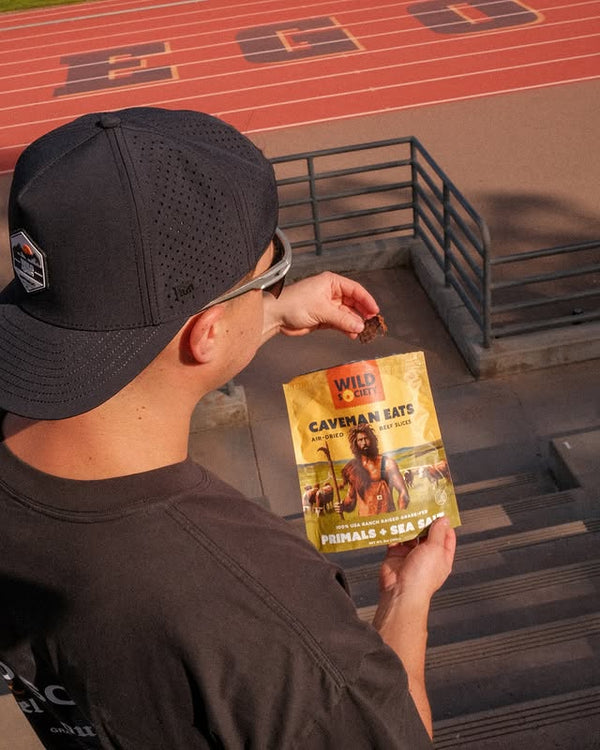
Caveman Eats uses grass-fed ribeye steak slices and sea salt, slow-cooked at low temperatures. The preparation method and thin slices distinguish the product's format; they are not a reason to assume every nutrient exceeds every competing snack. The concrete buying points are the beef source, two-ingredient recipe, and 95g protein per 5oz bag in Caveman Eats.
Caveman Eats: what to check before buying
| Buying question |
Product detail |
How to use it |
| What is the protein claim? |
95g protein per 5oz bag |
Keep the whole-bag basis attached to the figure. |
| What are the ingredients? |
Beef and sea salt |
A simple, savory recipe. |
| What is the format? |
Thin ribeye steak slices, slow-cooked at low temperatures |
Choose it for the steak-slice format and your texture preference. |
| What does the label say about sugar? |
0g total and added sugars per labeled serving |
Read alongside the remaining nutrition information. |
| How should an opened bag be stored? |
Enjoy within three days after opening or refrigerate |
Plan ahead when carrying a larger bag. |
For the sourcing question, see what grass-fed beef jerky means. For the processing comparison, our beef jerky versus biltong guide explains why product names alone do not describe every preparation method.
Shop Caveman Eats
95g protein per 5oz bag • Beef + sea salt • Ribeye steak slices slow-cooked at low temperatures
Choosing jerky for your day
Use jerky where convenience matters: a commute, a trip, a packed lunch, or time between meals. Decide how much you want before opening the bag, and keep water available alongside your food. After training, pair it with the rest of the meal or snack you need instead of expecting one product to cover every recovery requirement.
Questions about beef jerky protein
Is beef jerky a good source of protein?
Yes, beef supplies complete protein, and jerky makes it convenient to carry. The amount depends on the product and the portion, so read the label rather than treating all jerky as interchangeable. Keep bag-level claims separate from the portion you choose to eat. For a portable beef-and-sea-salt option, Caveman Eats provides 95g protein per 5oz bag.
Is beef jerky better than a protein bar?
The better choice depends on what you want from the snack. Compare protein, calories, carbohydrate, sodium, allergens, and serving size, then consider taste and convenience. Bars may include ingredients or carbohydrate sources you want; a simple beef snack offers a savory alternative. Neither category automatically wins every comparison. For readers who prefer steak slices over a sweet bar, consider Caveman Eats.
Can I eat beef jerky every day?
Frequency should fit your overall eating pattern, portion, and individual needs. Rotate protein sources and include foods that supply fiber and other nutrients. Check sodium and calories in the portion you actually eat, particularly if you have a clinician-set limit. Our guide to beef jerky and a balanced diet explores the broader nutrition question.
What snack is the highest in protein?
There is no useful universal winner without a fixed portion or calorie basis. A large package can outscore a small snack simply because it contains more food. Compare equivalent amounts and choose a snack you will use consistently. For a portable savory option, assess Caveman Eats' 95g protein per 5oz bag alongside its recipe and package instructions.
Is beef jerky a junk food?
That label hides the differences between recipes and portions. Look at what the product contributes to your day and what else you eat around it. Beef provides protein; flavoring, sodium, fat, and added sugars vary. A clear ingredient list and a portion that fits your needs are more informative than putting every jerky product into one category.
Can I eat beef jerky and still lose weight?
Jerky can fit a weight-management eating pattern, but it does not cause weight loss by itself. Overall energy intake, activity, and consistency matter. Check the calories in your chosen portion and avoid treating the whole bag as a single serving automatically. A planned protein snack can be useful when it fits the rest of your food choices.
What is the healthiest jerky to eat?
Choose by your needs rather than an unsupported overall ranking. Compare serving size, protein, sodium, added sugar, allergens, and ingredients, then pick a texture you enjoy. For a simple two-ingredient recipe with grass-fed ribeye steak slices and a clearly stated bag-level protein amount, the WSN option is Caveman Eats.
This article is for general informational purposes and isn't medical advice.