


How Many Protein Shakes a Day Is Actually Reasonable?
How many protein shakes a day do you need? Use a food-first protein gap worksheet, compare 20g and 25g servings, and decide when zero, one, or two makes sense.

Grass-fed tells you about the cow. It doesn't tell you about the snack. Four other things on the label do.
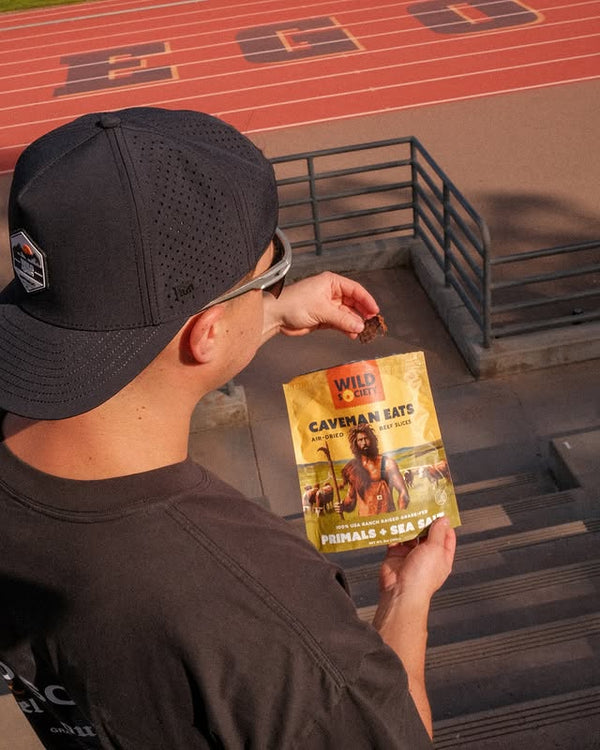
Check ingredients, protein with its stated quantity, sodium, and storage directions. Then choose the cut and texture you enjoy. We make Caveman Eats; this guide uses our product to show how those separate checks work.
Grass-fed describes the animal's feed. The ingredient list and Nutrition Facts describe the finished snack. A grass-fed product may be a chewy strip, a formed stick, or a crisp steak slice; sourcing alone does not determine its recipe or texture.
The USDA Food Safety and Inspection Service's animal-raising guidance treats unqualified “grass-fed” and “100% grass-fed” claims as synonymous. It describes forage feeding after weaning. That is more specific than the common online claim that grass-fed can simply mean a cow ate some grass at some point. Read the FSIS guidance on substantiating animal-raising claims for the primary reference.
For a shopper, three checks are especially useful:
Grass-fed does not automatically mean organic-certified or establish a particular environmental or health benefit. Look for separate evidence when a package makes those additional claims.
Feeding can affect the fat composition of beef. A review of grass-fed and grain-fed beef describes differences in fatty acids and some antioxidant-related compounds. Those findings concern beef composition, not a clinical test showing that a particular bag of jerky produces a health outcome.
Use that evidence for the question it can answer: sourcing can make a compositional difference. Do not use it to invent an omega-3 amount for a snack whose label does not provide one. The cut, recipe, moisture removal, and quantity eaten also influence what ends up in your diet.
Organic and grass-fed are separate claims. Organic refers to a certification framework; grass-fed describes feeding. If both matter to you, check that the exact product substantiates both. A pasture image is not certification.
| Package statement | Useful question to ask | What not to assume |
|---|---|---|
| Grass-fed beef | What does the brand say about its cattle's feed? | That it proves every other nutrition or farming claim |
| Organic | Is the exact product certified organic? | That every grass-fed product is organic |
| Grass-finished | What is the full feeding history being described? | That the finishing phrase supplies all missing detail |
| Two ingredients | Which two ingredients appear on the current package? | That ingredient count tells you the sodium amount |
This matters because shoppers often compare different things without noticing. One bag may emphasize organic certification, another beef origin, and another sugar. Decide which qualities you want first, then check each one directly. A product does not need every possible label claim to be a strong fit.
A two-ingredient recipe is easy to understand. For sodium and storage, use the current package: ingredient count does not supply either answer. Keep the protein number attached to its quantity—95g per 5oz bag for Caveman Eats describes the whole bag, not each handful.

A stick, a chewy strip, and a crisp steak slice offer different bites. Choose the format you want to carry and eat; a shared grass-fed claim does not make those textures interchangeable.
Caveman Eats uses whole-cut ribeye, slow-cooked at low temperatures into crisp steak slices. For a separate explanation of cuts, see our best meat for beef jerky guide. For a steak-chip texture and a two-ingredient recipe, choose Caveman Eats.
| Check | Caveman Eats |
|---|---|
| Named beef sourcing | Grass-fed beef |
| Identifiable cut and format | Ribeye steak slices |
| Understandable recipe | Two ingredients |
| Clear protein units | 95g protein per 5oz bag |
| Preparation description | Slow-cooked at low temperatures |
| Exact shopping destination | Caveman Eats product page |
A grass-fed snack can fit a varied diet. The sourcing claim answers the feeding question; ingredients, protein quantity, sodium, and the amount you eat answer the nutrition question.
Choose the sourcing, recipe, and texture you value. For whole-cut ribeye steak slices, two ingredients, and 95g protein per 5oz bag, our option is Caveman Eats.
Potential downsides include a higher price and a taste or texture that differs from what you normally buy. Grass-fed sourcing also cannot answer every nutrition question about a prepared snack. Compare the finished product, not just the beef description. Paying for a sourcing preference makes the most sense when the recipe and format are also ones you will enjoy.
Do not eat beef jerky when the package is damaged, there is visible spoilage, or storage has not followed the label. Also check the ingredients for anything you need to avoid. The USDA jerky safety guide explains why drying and safe handling matter. Follow the specific product's instructions after opening rather than assuming every bag keeps the same way.
Our broader high-protein beef jerky buying guide covers the category checklist. If your starting question is about jerky's place in an overall diet, read Is Beef Jerky Healthy?. Here, the specific choice is whether grass-fed sourcing plus a simple steak-slice snack matches what you want. Caveman Eats brings those qualities together in one clearly labeled bag.
This article is for general informational purposes and isn't medical advice.

Best Sellers
Use this text to share information about your collection with your customers.