


How Many Protein Shakes a Day Is Actually Reasonable?
How many protein shakes a day do you need? Use a food-first protein gap worksheet, compare 20g and 25g servings, and decide when zero, one, or two makes sense.

Whey isolate is one of the most efficient tools for a cut. Twenty grams of protein at about 100 calories makes it easier to hit your protein target inside a calorie-controlled plan. Here's how to use it well.
The practical benefit is protein in a measured serving. Whey isolate does not burn fat on its own; use the full drink's nutrition facts to decide what it contributes and what it replaces. Our ready-to-drink example below uses the bottle's verified 100 calories, not an assumed calorie count for every isolate powder.
Whey isolate supplies protein in a format that fits a calorie-controlled plan. Adequate protein and resistance training support lean-mass maintenance during a deficit. The product supplies nutrients; it does not promise a change in body weight.
An isolate is a more filtered form of whey. Compared with concentrate, it generally contains less of the milk's accompanying fat and lactose, though the finished product's full formula still matters. If you want the detailed category explanation, our whey protein isolate benefits guide owns that broader question.
A meta-analysis of whey protein and resistance exercise examined supplementation and calorie-replacement approaches. Those are distinct uses: adding protein and replacing an existing food change the diet differently. The research is not a trial of WSN products or a prediction of your results.
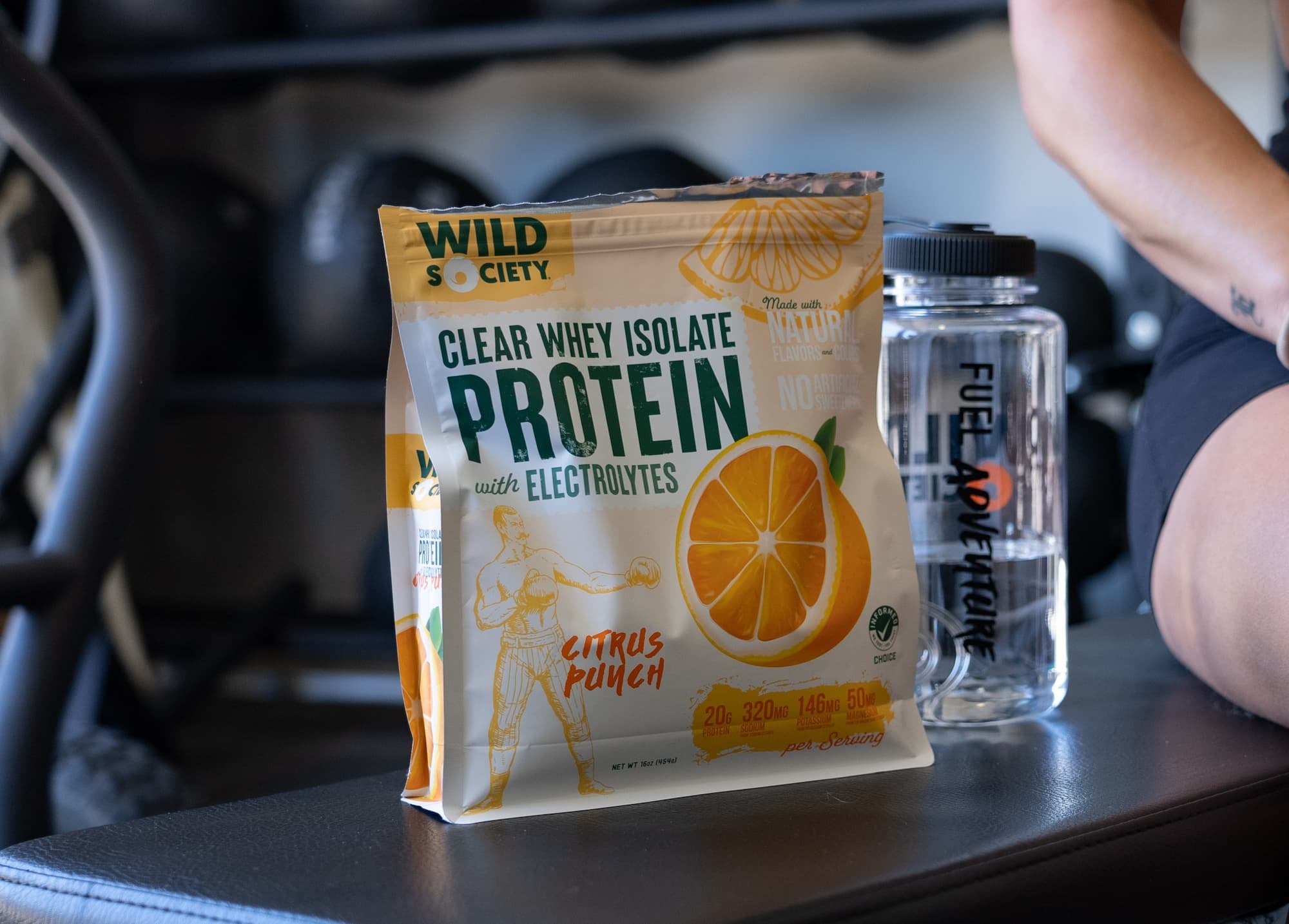
If a light, fruit-flavored drink fits your routine, Wild Society Clear Whey Isolate provides 20g protein per serving. It is a practical way to fill that defined gap without building your routine around a thick, milky shake.
For example, suppose you already like your breakfast but its protein contribution is small. Adding a planned serving of isolate may solve a specific gap. If you already meet your protein target through meals and snacks, the same serving solves a different problem only if you deliberately replace something or prefer the convenience.
People often search for whey protein isolate for weight loss and muscle gain at the same time. It is reasonable to care about both body weight and strength, but they are not interchangeable measurements. The scale alone cannot tell you whether a training and nutrition plan is supporting the changes you want.
Keep a few separate observations:

Whey isolate protein powder for weight loss is only one ingredient in the finished drink. Water, milk, fruit, oats, nut butter, and additional scoops create very different preparations. Some are light protein drinks; others are substantial snacks or meals. Neither is automatically wrong, but they need different places in the day.
When comparing whey isolate protein shakes for weight loss, record the whole drink, not just the scoop. The label on a powder usually describes the powder prepared according to a stated serving, not every ingredient you might blend into it. If you want help interpreting energy units, our kcal versus calorie guide explains the label terminology.
A replacement ledger is simply a short record of what a shake changes. It is an original planning aid, not a medical prescription or a claim that one calorie target works for everyone.
| Situation | What to write down | Decision |
|---|---|---|
| Replacing an existing snack | The old snack and the complete new drink | Compare the actual change |
| Adding protein to breakfast | Existing breakfast plus the new serving | Check the combined meal |
| Blending a substantial shake | Powder, liquid, fruit, and every extra | Count it as the substantial preparation it is |
| Using a ready-to-drink bottle | The whole-bottle label and what it replaces | Keep the unit consistent |
Replacing a 300-calorie snack with one 100-calorie bottle of Protein + Hydration RTD changes that eating occasion by 200 calories: 300 − 100 = 200. Adding the same bottle without replacing anything adds 100 calories. This is a comparison of food energy, not a forecast of weight lost; the rest of the day still counts.
You can simplify the routine by:
That last situation is where a ready-to-drink format earns its place. Protein + Hydration RTD has 20g whey protein isolate and 100 calories in one 16 fl oz bottle. Its electrolyte breakdown is 240mg sodium, 110mg potassium, and 35mg magnesium. The bottle gives you a defined serving when a shaker and a measured scoop are inconvenient.
A protein drink is not automatically a complete meal. Look at what you would be removing if the drink replaced breakfast, lunch, or dinner. A meal may supply produce, fiber, fats, carbohydrates, and variety that a simple isolate drink does not attempt to reproduce.
The NIH Office of Dietary Supplements explains that protein needs can often be met through food, with supplements helping when needed. That supports using the product purposefully within a diet, rather than asking it to replace the diet.
Choose a whey isolate with a named protein source, clear serving information, an ingredient list you can inspect, and a texture you enjoy. Compare the full preparation: powder mixed with water and powder blended with milk, oats, or nut butter contribute different totals.
Our best protein powder for weight loss guide compares the wider selection decision. Here, the focus is narrower: using isolate well during a calorie phase, then choosing among our formats based on the moment.
For a lighter fruit-flavored drink, Clear Whey Isolate provides 20g protein per serving. For a creamy shake or smoothie with 25g protein per serving, choose Grass-Fed Whey.
| WSN format | Verified protein amount | Practical fit |
|---|---|---|
| Clear Whey Isolate | 20g per serving | A light, fruit-flavored drink you mix yourself |
| Grass-Fed Whey | 25g per serving | A creamy shake or smoothie routine |
| Protein + Hydration RTD | 20g per bottle | A defined, ready-to-drink serving without a shaker |
The RTD provides 100 calories, 0g total sugars, and 0g added sugars per bottle, with 240mg sodium, 110mg potassium, and 35mg magnesium. The powder and bottle are different formulas; do not transfer the bottle's calorie or mineral figures onto a scoop of powder.
Whey isolate provides a convenient protein serving that can fit a calorie-controlled plan. It is not a fat-loss treatment. Account for the full preparation and keep resistance training and varied meals in your routine.
Whey supplies protein; the type you choose determines the format and labeled serving. For a creamy shake, Grass-Fed Whey provides 25g protein per serving. For a light fruit-flavored drink, Clear Whey Isolate provides 20g per serving.
Whey protein does not selectively reduce belly fat. A powder or bottle cannot target one body area. Evaluate its nutrition facts and place in your overall diet, not a fat-burning promise.
Potential downsides to whey isolate include a format or flavor you do not enjoy, digestive discomfort with a particular preparation, and added calories if the drink is unplanned. Whey is milk-derived, so a low-lactose number is not a milk-allergy guarantee. Read the ingredient and allergen information, and seek individualized advice if you have dietary restrictions or ongoing symptoms.
It can be okay to drink whey isolate every day as part of a routine if it serves a real protein need and fits your overall diet. Daily use is not a requirement for progress, and the useful amount depends on what you already eat. Revisit the routine when your meals, training, or schedule change rather than keeping an extra shake by habit.
Choose the format for the occasion: a creamy smoothie with Grass-Fed Whey, a light mixed drink with Clear Whey Isolate, or a measured 20g protein, 100-calorie bottle when you need no-prep convenience: Protein + Hydration RTD.

20g whey isolate • 100 calories • 0g total and added sugars • One 16 fl oz bottle
This article is for general informational purposes and isn't medical advice.

Best Sellers
Use this text to share information about your collection with your customers.