

Creatine for Longevity: Why the Aging Conversation Moved Beyond Muscle
Why creatine keeps coming up in longevity circles: muscle preservation, brain support, and healthy aging, what the research actually shows, and how to use it.

Walk down any supplement aisle and you will see the same word doing a lot of quiet work on the labels: isolate. It usually costs more than standard whey, the tubs promise a purer product, and almost nobody explains what you are actually paying for. So before you spend the extra money, it is worth pinning down the real whey protein isolate benefits, the ones that show up in nutrition labels and digestion, not just in marketing copy.
This guide grades those benefits honestly. The genuine whey protein isolate benefits come down to three things: more protein in every scoop, far less lactose, and fast absorption with a strong leucine payload. Those are real, measurable, and worth money to the right person. But isolate is not automatically better for everyone, and we will spend real time on who does not need the upgrade, which is a section you will rarely find on a supplement brand's blog. We will also cover clear whey protein isolate, the newer juice-like form of isolate that has changed how a lot of people take their protein.
Here is the short version:

20g clear whey isolate · electrolytes · no artificial sweeteners
All whey starts in the same place. When milk is turned into cheese, the liquid left behind is whey: a complete, fast-digesting protein containing all nine essential amino acids. What happens next is what separates the products on the shelf.
So isolate is not a different protein. It is the same whey, refined further. Every filtration pass costs the manufacturer yield and money, which is why isolate sits at a higher price tier. What you get for that price is purity: more of each scoop is protein, and less of it is the stuff that causes bloating or pads the calorie count.
A common question here is whether "100% whey" products beat isolate. They usually do not, because the phrasing is doing a trick. "100% whey" means all of the protein in the tub comes from whey; it says nothing about how refined that whey is. Most "100% whey" products are concentrate or a concentrate-heavy blend, so a true isolate typically gives you more protein and less lactose per scoop than a "100% whey" blend at the same serving size. Read the ingredient list, not the front of the tub.
This article stays focused on benefits. If you want the full head-to-head on processing, macros, price, and when each one wins, we break that down in our whey protein isolate vs concentrate comparison. The short answer is that they are closer cousins than the price gap suggests, and the rest of this article explains exactly where the gap is worth paying for.
The first benefit is the simplest: purity. Because isolate is roughly 90% protein by weight versus roughly 70-80% for concentrate, every gram of powder in an isolate tub is working harder for you.
Run the numbers on a typical 30 g scoop:
That difference compounds in ways that matter to specific goals:
One honest caveat: if your protein target is modest and your calories are not tight, the per-scoop difference between 24 g and 27 g will not change your results. Purity is a genuine benefit, but it is a benefit with a specific audience, which is a theme that will keep coming up in this article.
This is the benefit that turns skeptics into isolate loyalists, because it is the one you can feel within an hour of drinking a shake.
Lactose is the natural sugar in milk, and it needs an enzyme called lactase to be digested. According to MedlinePlus, roughly 65 percent of adults worldwide have some decline in lactase production after childhood, which means a majority of the human population digests lactose imperfectly. Symptoms of lactose malabsorption are familiar to anyone who has regretted a milkshake: bloating, gas, cramping, and digestive urgency.
Here is why that matters for protein powder:
The practical result is that a large group of people who cannot comfortably drink a concentrate shake do perfectly fine on an isolate. If your post-workout shake reliably produces bloating or an emergency trip to the bathroom, switching to a whey isolate is the first, cheapest experiment to run, well before you abandon whey for pea or soy protein that you may not enjoy as much.
Two honest boundaries on this benefit:
Note the wording throughout this section: minimal lactose. Zero-lactose claims are worth checking against the actual panel.
20g clear whey isolate · electrolytes · no artificial sweeteners
The third benefit is about speed and signaling.
Whey in any form is one of the fastest-digesting complete proteins you can consume. Where a whole-food meal of chicken and rice releases amino acids over several hours, a whey shake spikes blood amino acid levels within about an hour. Isolate, with less fat and lactose to slow gastric emptying, is at the fast end of an already fast category, and it is the format most of the absorption research has been built on.
Speed alone is not the point, though. The point is what arrives quickly:
When does the speed genuinely matter?
And the honest caveat, once again: over a full day, total protein intake matters far more than absorption speed. A slower protein at breakfast does not sabotage anything. Fast absorption is a genuine edge at specific moments, not a requirement for progress.
Most brand pages end the argument at "isolate is purer, buy isolate." That is not honest, so here is the version that is.
Who should skip whey entirely, rather than just skipping the upgrade? People with a diagnosed milk protein allergy, anyone whose doctor has them on a protein-restricted diet (for example, for advanced kidney disease), and anyone whose severe dairy reactions persist even on isolate. For those groups the answer is a non-dairy protein and a conversation with a clinician, not a more filtered whey.
That is the honest scorecard. Isolate is a specialist's tool with a wide specialist audience, not a mandatory upgrade. If you recognized yourself in the first list, the rest of this article is for you.
20g clear whey isolate · electrolytes · no artificial sweeteners
For decades, every whey shake was a variation on a milkshake: creamy, opaque, and heavy. Clear whey protein is the first real break from that template, and it is built on isolate.
So what is clear whey protein? It is whey protein isolate that has been further processed so the protein stays dissolved and transparent in water instead of forming a cloudy, milky suspension. The practical result is a drink that looks and drinks like juice or a sports drink: light, clear, and typically fruit-flavored. Nothing about the protein's amino acid profile changes. A clear whey isolate protein powder is still whey isolate, with all three benefits covered above intact: high protein purity, minimal lactose, fast absorption, strong leucine content.
What changes is the experience:
A few honest notes so this stays a benefits article and not an ad:
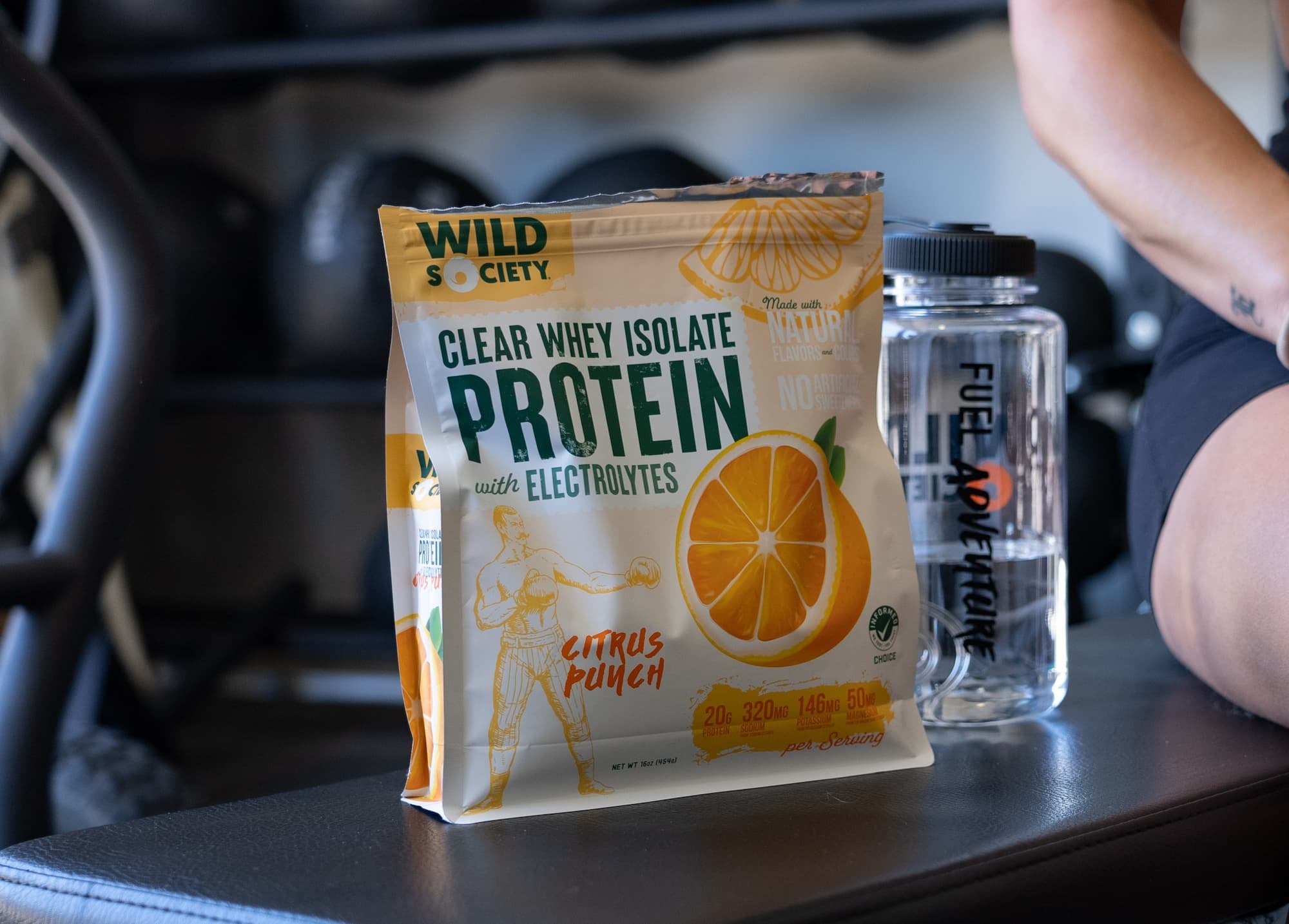
Our own entry here is Wild Society's Clear Whey Isolate with Electrolytes, and it is a clean example of the format done right: 20 g of clear whey isolate protein per serving with added electrolytes, no artificial sweeteners, natural flavors and colors, and 16 servings per tub. The electrolyte addition is a deliberate pairing, because the people most drawn to a light, juice-like protein (hot-weather training, long sessions, fasted morning workouts) are the same people replacing fluids and minerals anyway. It mixes clear and light rather than milky, which is precisely the point of the category.
If you are weighing the format itself rather than the benefits, we compare texture, digestion, use cases, and value in our full clear whey vs regular whey protein breakdown.
Here is how the three main formats stack up side by side, a comparison the top-ranking pages never make because they only ever compare two at a time:
| Whey Concentrate | Whey Isolate | Clear Whey Isolate | |
|---|---|---|---|
| Typical protein % by weight | ~70-80% | ~90%+ | ~90%+ (isolate base) |
| Lactose load | Meaningful; the usual culprit behind post-shake bloating | Minimal | Minimal |
| Texture and mixing | Creamy, can clump; opaque milkshake style | Creamy but lighter; mixes easily | Thin, clear, juice-like; foams briefly then settles |
| Taste profile | Milky flavors: chocolate, vanilla, cookies | Same milky territory, slightly cleaner | Fruit flavors: berry, citrus, tropical |
| Cost tier | $ | $$ | $$-$$$ |
| Best use | Budget-friendly daily protein for people who tolerate dairy well | Cutting, high protein targets, sensitive stomachs | Sensitive stomachs plus anyone who dislikes creamy shakes; training in heat; fasted or intra-day sipping |

The research on protein is refreshingly practical. Here is how to turn it into a routine:
A quick word on quality, because isolate is only worth the upgrade if the tub delivers it:
And for the days when even a shaker bottle is one step too many, the same isolate logic now comes pre-mixed. A ready-to-drink clear whey covers the gym bag, the car, the desk drawer, and the post-hike cooler: grab, twist, drink, done. Wild Society's Protein + Hydration RTD is exactly that: 20 g of whey isolate with 240 mg sodium, 110 mg potassium, and 35 mg magnesium in a 16 oz bottle, 100 calories and zero sugar, sold in 12-packs. If pre-mixed is your main use case, we break down how to judge the category in our guide to the best ready-to-drink protein shakes.
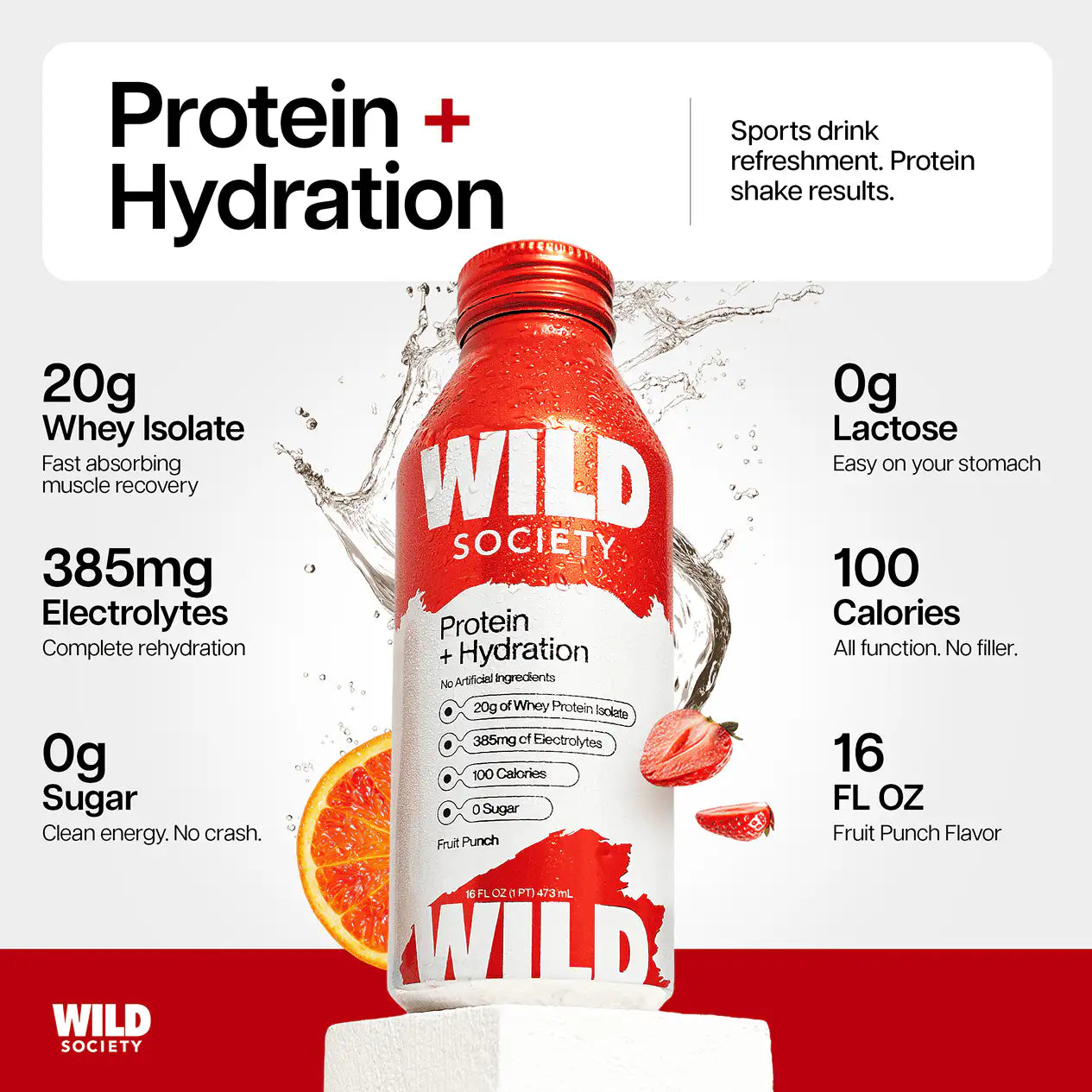
20g whey isolate · 0g sugar · 240mg sodium · 110mg potassium · 35mg magnesium
Yes. For healthy people, daily whey isolate is well tolerated and is simply a convenient protein food, like eating chicken or eggs daily. The sensible guardrails are to keep it within your overall protein target of roughly 1.4-2.0 g/kg if you train, and to let whole foods supply most of your protein. People with kidney disease or on medically restricted diets should clear any protein supplement with their doctor first.
Not directly. No protein powder burns fat from any specific body part; fat loss comes from a sustained calorie deficit, and spot reduction is a myth. What whey isolate does do is make a deficit easier to hold: protein is the most satiating macronutrient, it helps preserve muscle while you cut, and isolate delivers it with very few extra calories. It is a useful tool inside a fat-loss diet, not a fat-loss agent on its own.
It is better for specific people rather than universally better. If you are sensitive to lactose, cutting calories, or chasing a high protein target, isolate's purity and minimal lactose are genuine, feel-it-in-your-gut upgrades over concentrate. If you tolerate regular whey fine and your calories are not tight, both deliver the same amino acids and build the same muscle. "Better" here means better fit, not better protein.
A few honest ones. It costs more than concentrate for a modest purity gain. The extra filtration removes some of the minor bioactive milk fractions concentrate retains, though the practical significance of that is unproven. It still is not suitable for people with a true milk protein allergy. And like any protein powder, an excessive intake can crowd out whole foods. None of these are dangerous for healthy users; they are trade-offs to price in.
There is no single healthiest powder; there are healthy choices within each category. For most people without dairy issues, a whey isolate with a short ingredient list, no artificial sweeteners, and third-party testing is among the strongest options because it is a complete, high-leucine protein with minimal lactose and filler. People avoiding dairy entirely do well with quality soy or blended pea-and-rice proteins. The label matters more than the category.
Physician caution is usually about the industry, not the protein. Supplements are loosely regulated, some powders have tested positive for contaminants or heavy metals, and marketing routinely oversells what powder does. Clinicians, including the Cleveland Clinic's dietitians, generally prefer a food-first approach and reserve powder for filling genuine gaps. The practical response is to choose a third-party-tested product with a short label and treat it as convenient food, at which point most of the medical objections fall away.
By sales, milky-style whey blends from the giant legacy brands have historically topped the global market. But "best-selling" is a marketing fact, not a nutrition one; many of those market leaders are concentrate-heavy blends. The more useful question is which powder is number one for your situation: for sensitive stomachs, calorie-controlled phases, and anyone who dislikes thick shakes, a clean clear whey isolate has a strong claim, which is exactly why it is the fastest-growing corner of the category.
The real whey protein isolate benefits hold up under honest scrutiny: more protein in every scoop, a minimal lactose load your stomach will thank you for, and fast, leucine-rich absorption that fits exactly how the research says to dose protein. Those benefits have a clear audience: people cutting calories, chasing high protein targets, training hard, getting older, or fighting their stomach every time they drink regular whey. They also have honest limits: if concentrate treats you fine and you are nowhere near your protein target, fix the total first, and our Grass-Fed Whey is built for exactly that job. If you recognized yourself in the isolate audience, Clear Whey Isolate is the cleaner, lighter way to get there.
If you are in the upgrade camp, the modern way to take isolate is lighter than the old milkshake: a clear whey isolate mixed with water, with electrolytes if you train hot or long, and a ready-to-drink bottle in the bag for the days you will not touch a shaker. Purity you can measure, digestion you can feel, and a format you will actually stick with. That is the whole upgrade.
This article is for general informational purposes and isn't medical advice.

Best Sellers
Use this text to share information about your collection with your customers.