Type a search for the best ready to drink protein shakes and you'll get a wall of listicles ranking bottles the writer may or may not have opened, plus a grid of ads. What you won't usually get is the thing that actually decides whether a shake is worth your money: a way to read the label yourself.
That's what this guide is. We're not going to rank brands or pretend we lab-tested the whole cooler aisle. Instead, you'll learn how to judge any ready-to-drink (RTD) protein shake in about thirty seconds: the protein dose and type that matter, the sugar and sweetener lines to check, the difference between milky shakes and the newer clear protein drinks, and the honest cases where a tub of powder beats a bottle entirely. Once you can do that, "which one is best" stops being a question you outsource to a listicle.
One thing to know up front: Wild Society makes an RTD protein drink, and later in this guide we'll hold it to the exact same criteria we're teaching you. If it didn't pass its own checklist, we wouldn't ship it.
Why ready-to-drink shakes earn a place
Powder is cheaper per gram of protein. That's true, and it's the whole argument against RTDs, so let's deal with it honestly: you're paying for convenience. The question is whether that convenience actually changes your behavior, and for a lot of people it does.
The research case for protein around training is strong. The International Society of Sports Nutrition's position stand concludes that active people benefit from substantially more protein than sedentary adults, in the range of 1.4-2.0 grams per kilogram of body weight daily, ideally spread across doses of roughly 20-40 grams (International Society of Sports Nutrition Position Stand: protein and exercise). The hard part was never the science. The hard part is logistics: the gym bag with no shaker, the car ride after a session, the afternoon where lunch was small and dinner is far away.
An RTD solves the logistics problem. It's a fixed, known dose of protein that requires no scoop, no water source, no clumps, and no shaker that ferments in your trunk for a week. That's why RTDs earn a place for:
- Post-workout protein when you're leaving the gym, field, or trail with nothing mixed
- Travel days, flights, and road trips where powder is impractical
- A controlled protein dose during a busy workday, instead of a vending-machine guess
- People new to hitting protein targets who do better with zero-prep options
- Hot-weather training, where a cold bottle is the version you'll actually drink
None of that requires an RTD to be magic. It requires it to be well-built, and most aren't. The rest of this guide is how you tell the difference.
20g whey isolate · 0g sugar · 240mg sodium · 110mg potassium · 35mg magnesium
The label numbers that matter
Flip the bottle around. The front is marketing; the panel on the back is the product. Four lines do almost all of the work, and you can screenshot these targets and shop against them anywhere.
-
Protein: 20 grams or more per bottle. This is the anchor number. The ISSN position stand's per-dose guidance of roughly 20-40 grams is your floor and ceiling: a bottle delivering 10-12 grams is a snack drink wearing a protein costume, while 20-30 grams per bottle covers the post-workout job for most people (International Society of Sports Nutrition Position Stand: protein and exercise).
-
Protein source: named, and high in the hierarchy. "Protein blend" tells you nothing. You want the ingredient list to name the source, and the next section gives you the full hierarchy to judge it against.
-
Added sugar: as close to zero as you can get. The FDA's Daily Value for added sugars is 50 grams per day on a 2,000-calorie diet, and the Nutrition Facts label now breaks added sugars out on their own line with a percent DV (FDA: Added Sugars on the Nutrition Facts Label). A practical ceiling for a daily-use shake: 5% DV or less, which is 2.5 grams of added sugar per bottle. Some flavored shakes quietly spend 15-20% of your entire day's added-sugar budget in one serving.
-
Electrolytes present, if the bottle is doing post-workout duty. You sweat out sodium and other minerals during training, and a shake that pairs its protein with electrolytes handles rehydration and recovery in one container. If the panel shows meaningful sodium and potassium, that's a point in its favor; if you want the deeper version of this logic, we've broken down what makes the best post-workout drink in its own guide.
Two quick reading habits will keep you honest. First, check the serving size: some larger bottles list two servings, which doubles every number you just read. Second, don't let calories fool you in either direction. A 90-calorie clear drink and a 350-calorie meal-replacement shake can both be "good," but they're different tools, and the label tells you which one you're holding.
What about everything else on the panel?
Fat, fiber, and total carbohydrate matter less than the marketing suggests for a protein-first bottle. Fat in an RTD is mostly a texture decision, fiber is rarely present in meaningful amounts, and carbs outside of added sugar are usually modest. The one remaining line worth a glance is the ingredient list's length and legibility: a shorter list isn't automatically healthier, but a list where you can identify the protein source, the sweetener, and the flavor system in ten seconds is a list that isn't hiding anything.
Protein type: isolate, concentrate, milk protein, plant
Two bottles can both say "20g protein" and be meaningfully different products, because the source behind that number changes digestion, texture, and how much of the bottle is actually protein. Here's the hierarchy, from a label-reader's point of view.
Whey protein isolate is the most filtered form of whey. The extra processing strips out most of the fat, carbohydrate, and lactose, leaving a protein that is typically 90% protein or more by weight, fast to digest, and complete in all essential amino acids. Isolate's low lactose content also makes it the gentlest whey option for people who find dairy heavy. It's the most expensive common source, which is exactly why cheaper shakes avoid it. We've covered the full case in our guide to whey protein isolate benefits, but the short version for label reading is: if the ingredient list leads with whey protein isolate, the formulator didn't cut the corner most brands cut.
Whey protein concentrate is the standard tier: complete protein, well studied, cheaper, but less filtered. Concentrates run roughly 70-80% protein by weight and carry more lactose and fat along for the ride. Perfectly good in a quality formula; just understand it's the value tier, and people sensitive to lactose feel the difference.
Milk protein and casein show up in most of the big-name milky shakes. Milk protein concentrate is roughly 80% casein and 20% whey, digests slowly, and produces that thick, milkshake-like body. Slow digestion isn't bad (it's a feature before bed or as a meal stand-in), but it's a different job than fast post-workout delivery.
Plant proteins (pea, soy, rice, and blends) are the right call for vegans and the dairy-averse. Soy is complete on its own; pea and rice are usually blended to cover each other's amino-acid gaps. The label trap here is dose: plant proteins can run lower in leucine per gram, so favor plant RTDs at the higher end of the 20-40 gram range rather than the bottom.
Collagen, finally, is the one to catch: it appears in "protein" drinks but is an incomplete protein, missing an essential amino acid entirely. Fine for its own purposes; not a substitute for a complete protein source in a shake you're drinking for muscle recovery. Harvard's Nutrition Source makes the broader point that protein quality (the "protein package") matters as much as quantity when you're choosing sources (Harvard T.H. Chan School of Public Health: Protein).
The practical rule: the first protein named in the ingredient list is the product's real identity. Everything after it is supporting cast.
20g whey isolate · 0g sugar · 240mg sodium · 110mg potassium · 35mg magnesium
Sugar and sweeteners
Protein shakes have a dessert problem. To make milk protein palatable in a bottle, many brands lean on sugar, and a "healthy" shake can carry the added-sugar load of a candy bar. This is the single fastest disqualifier on the label, so check it first.
The FDA's added-sugars line exists precisely for this: it separates the sugars a manufacturer put in from the sugars naturally present (like the small amount of lactose in a dairy-based shake), and it shows you the percent of the 50-gram Daily Value each serving spends (FDA: Added Sugars on the Nutrition Facts Label). Read it in two steps:
-
Added sugars: your daily-use ceiling should be low single digits of grams. Zero is common now and is a reasonable default demand. A bottle spending 10+ grams of added sugar is a treat, not a tool.
-
Total sugars minus added sugars: what's left is mostly naturally occurring lactose in dairy shakes. A few grams here is not a red flag; it's just milk being milk.
Take the sugar out, though, and something has to carry sweetness. That's the sweetener system, and it's worth one more glance:
-
Stevia and monk fruit are the plant-derived high-intensity options. Clean profile at RTD doses; stevia can read slightly bitter to some palates.
-
Sucralose and acesulfame potassium are the common synthetic pair, extensively reviewed and approved at typical intakes. The honest knock is taste (a lingering artificial edge some people notice), not a safety scandal.
-
Sugar alcohols are rarer in RTDs than in bars, which is good news, because they're the category most likely to bloat a sensitive gut.
There's no universally correct answer here, but there is a personal one: if you're drinking a shake several times a week, the sweetener you genuinely like on bottle forty matters more than any ranking. And treat front-label phrases like "naturally sweetened" or "no junk" as invitations to read the back, not as conclusions.
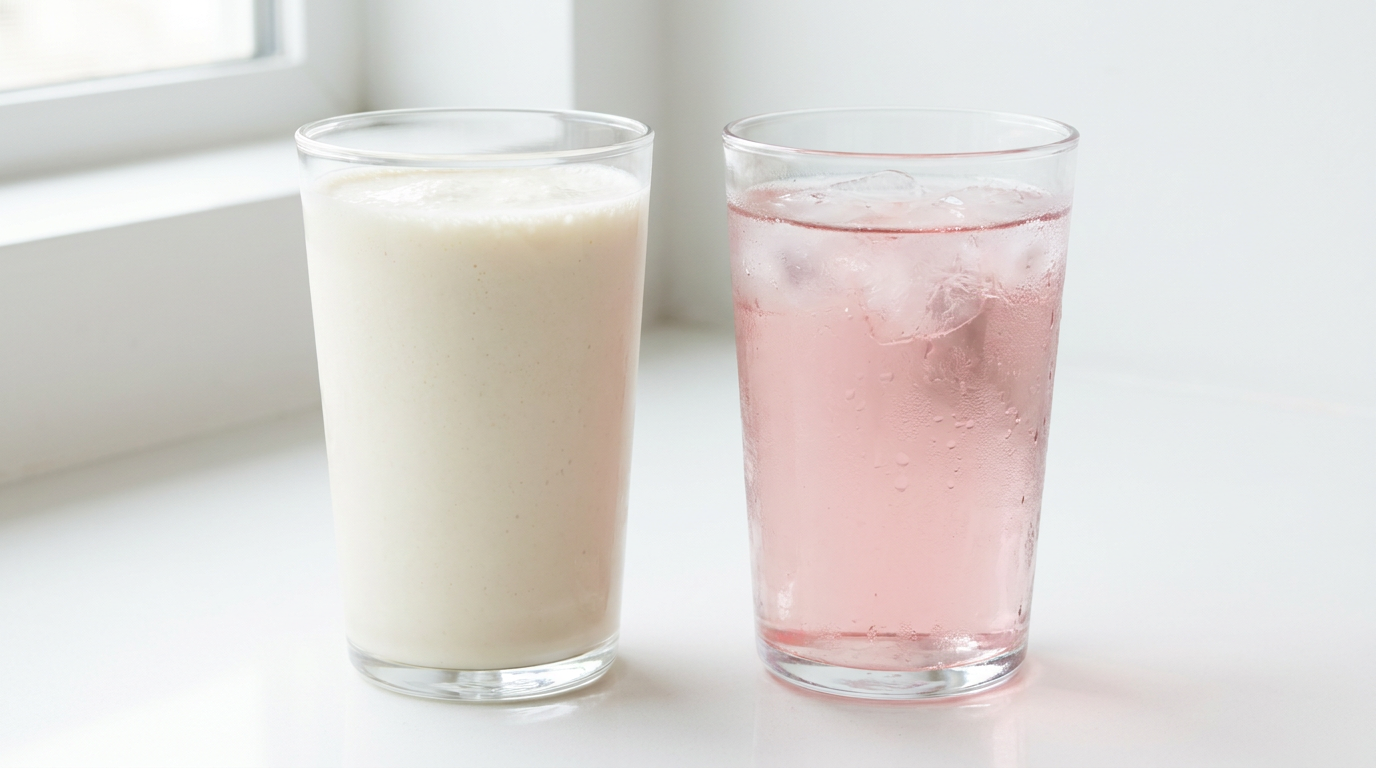
Milky shakes vs clear protein drinks
For most of the category's history, "protein shake" meant one texture: thick, creamy, milkshake-adjacent. That's still the default, and the biggest names in the cooler are built that way on milk protein. But there's now a second body style worth knowing: the clear protein drink, which uses highly filtered whey isolate to produce something that looks and drinks more like a sports drink or juice than a milkshake.
This isn't a gimmick split; it's a use-case split. Here's the honest comparison:
|
Clear protein RTD |
Milky protein RTD |
| Protein type |
Whey protein isolate |
Milk protein, casein, or whey concentrate blends |
| Texture |
Light, crisp, juice-like |
Thick, creamy, milkshake-like |
| Typical calories |
~90-130 per bottle |
~150-350 per bottle |
| Lactose load |
Minimal (isolate is heavily filtered) |
Low to moderate, varies by formula |
| Best use case |
Post-workout, hot weather, mid-day protein when a milkshake sounds heavy |
Meal replacement, slower digestion, dessert-style cravings, before bed |
The milky question that keeps coming up in search is whether the big dairy-based shakes are healthy, usually asked by brand name. Answered at the category level: milk-protein shakes built on ultrafiltered dairy can be a legitimately solid option, typically delivering complete protein with modest sugar. Judge any of them with the exact tools from this guide: 20 grams or more of named protein, added sugars in the low single digits, a sweetener you tolerate, and a serving size that matches what you'll actually drink. A milky shake that passes those checks is a fine choice; the point is that the label decides, not the logo.
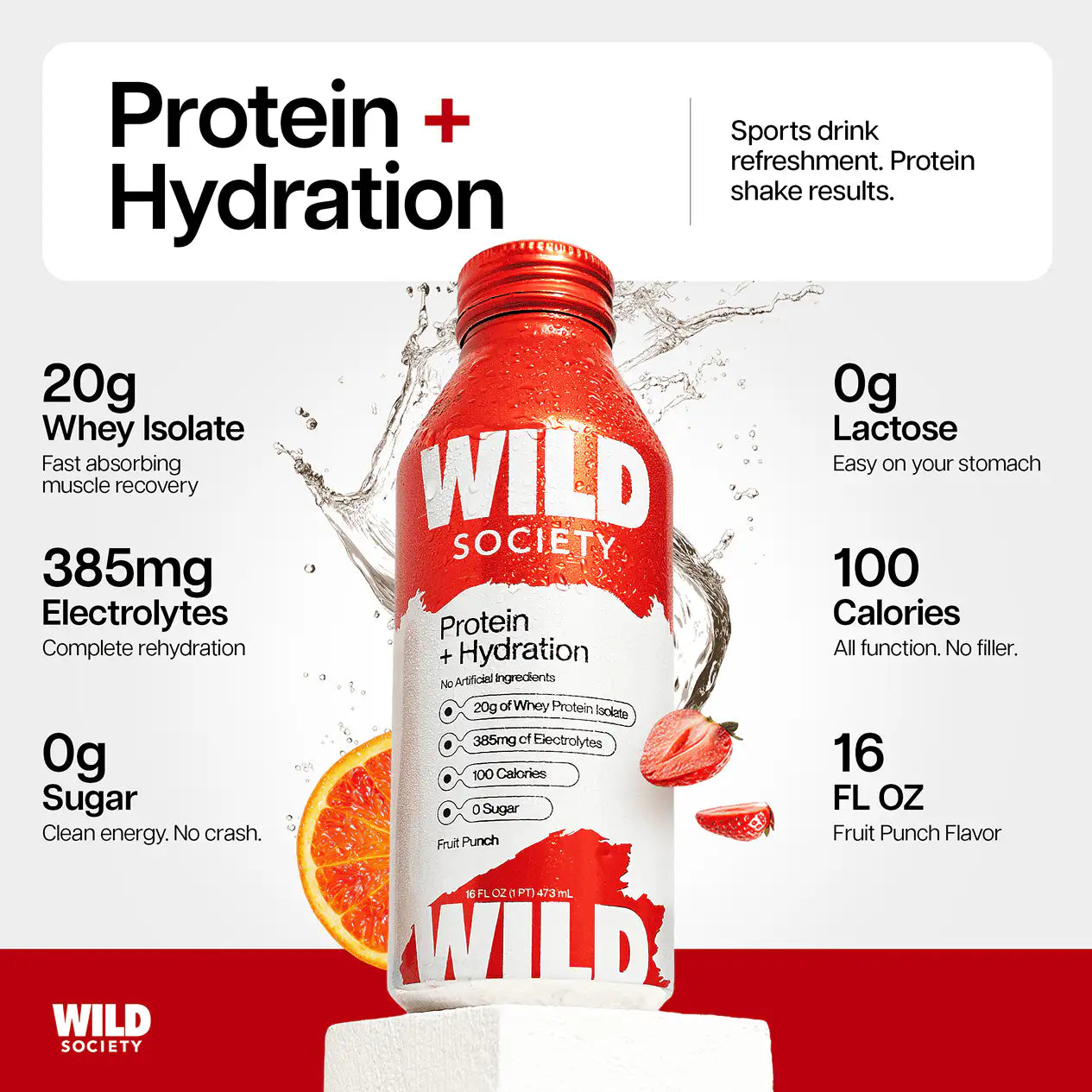
Where the clear format wins is the moment of consumption. Straight after training, in summer heat, or mid-afternoon at a desk, a thick dairy shake can feel like a second meal, and shakes that feel like a chore get skipped. A light, crisp clear drink removes that friction. Wild Society's Protein + Hydration RTD sits in this lane deliberately: 20 grams of whey protein isolate with 240 mg sodium, 110 mg potassium, and 35 mg magnesium in a 16-ounce aluminum bottle, clear and non-milky, 100 calories and zero sugar, so the post-workout protein and the rehydration happen in one cold drink you actually look forward to. We run it through the full checklist at the end of this guide, line by line. If you're curious why clear whey behaves so differently from regular whey in the first place, we've unpacked the filtration story in clear whey vs regular whey protein.
20g whey isolate · 0g sugar · 240mg sodium · 110mg potassium · 35mg magnesium
When an RTD beats powder (and when it does not)
No brand selling bottles loves writing this section, so we will: sometimes powder is simply the better buy. The two formats deliver the same nutrient; they differ in cost, control, and convenience.
The RTD wins when:
- You're consuming it away from a kitchen: post-gym, in the car, at work, traveling
- Consistency is your failure point, and removing every step of prep is what keeps you on target
- You want a cold, ready, sealed serving with zero cleanup
- You're stocking a gym bag, cooler, or office fridge with grab-and-go doses
Powder wins when:
- Cost per serving is the priority; powder is meaningfully cheaper per gram of protein
- You want dose control: half scoops, double scoops, or blending into smoothies and food
- You have shelf-space logistics on your side; a tub outlasts a case of bottles
- You're mixing at home anyway, where "just add water" takes forty-five seconds
Most consistent protein users end up running both: powder at home as the workhorse, bottles for everywhere the shaker doesn't go. One warning as you compare: don't let the format switch lower your label standards. The same rules apply to a tub, and a category-level note is worth adding, because "why do doctors say no to protein powder" is a real search with a real answer. The medical caution isn't that supplemental protein is dangerous for healthy people; it's that supplements are regulated with less pre-market scrutiny than drugs, some products have tested poorly for label accuracy or contaminants, and whole-food protein brings a fuller nutrient package. Harvard's Nutrition Source lands in the same place: food first, supplements as a convenience layer, and choose third-party tested products when you use them (Harvard T.H. Chan School of Public Health: Workout Supplements). That's an argument for reading labels and choosing transparent brands, not for abandoning a tool that works.
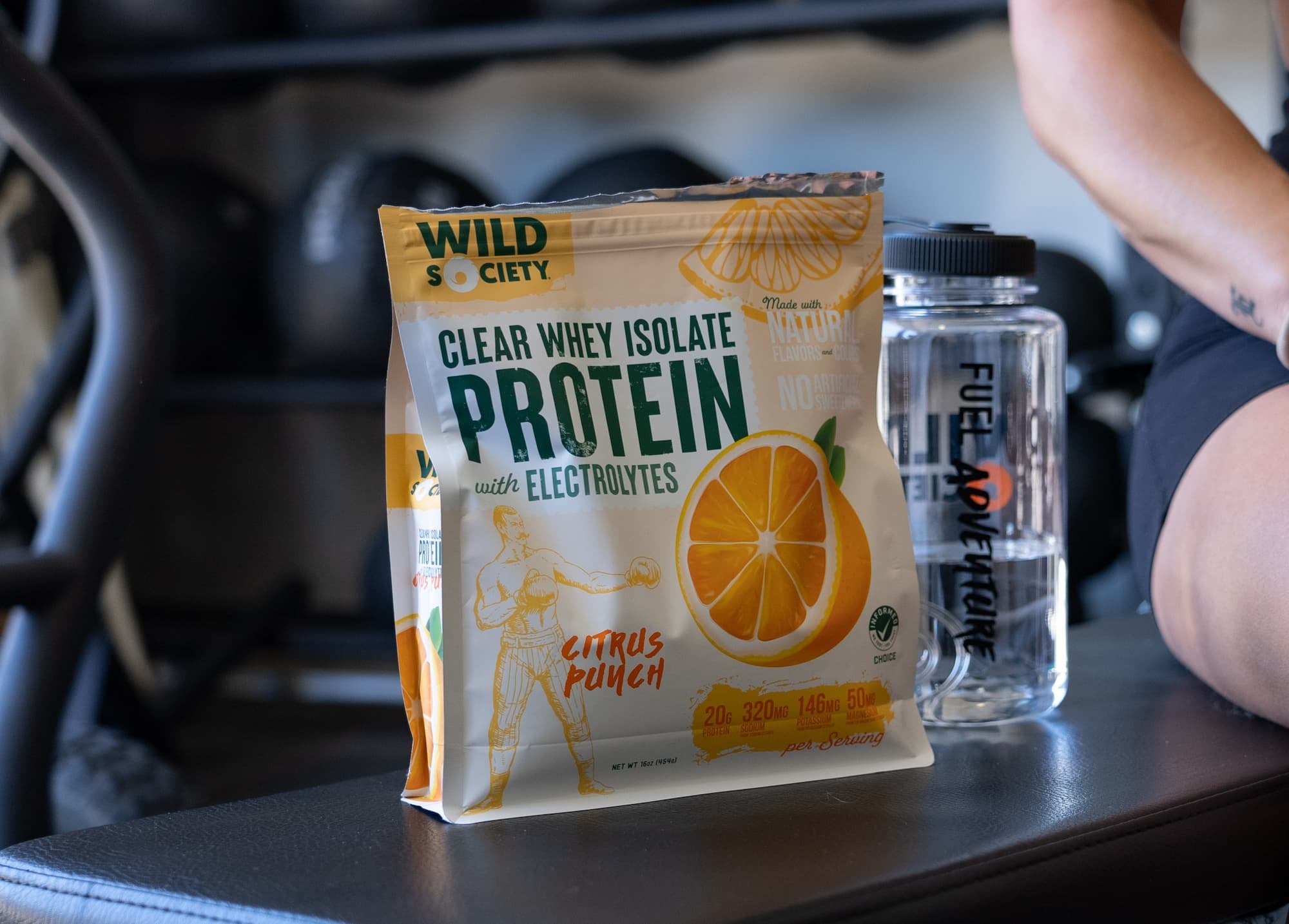
If you land on the powder side for home use, apply this exact guide to the tub. Our Clear Whey Isolate powder is the scoop version of the same philosophy: 20 grams of clear protein with electrolytes per serving, no artificial sweeteners, 16 servings to a bag, and the same light, non-milky drinking experience.

20g clear whey isolate · electrolytes · no artificial sweeteners

A label checklist before you buy
Here's the whole guide compressed into a thirty-second bottle check. Screenshot it:
-
Protein: 20 g or more per bottle, per the sports-nutrition dosing range of roughly 20-40 g
-
Source: named in the ingredient list, with isolate at the top of the hierarchy, and no anonymous "protein blend"
-
Added sugars: 5% Daily Value or less, checked on the added-sugars line, not the front label
- Sweetener: a category you tolerate and a taste you'll still want on bottle forty
-
Serving size: the whole bottle is one serving, or you've mentally doubled every number
- Electrolytes: present if the bottle is your post-workout drink
-
Texture matched to the moment: clear and light for training and heat, milky and thick for meal-replacement duty
-
Calories consistent with the job: ~90-130 for a lean protein-and-hydration bottle, more only if you want a meal
- No collagen masquerading as the primary protein source
-
A brand willing to show its label prominently: formulas that hide their panels usually have a reason
A bottle that clears that list is a good ready-to-drink protein shake, whoever makes it. That's the entire trick: the "best" RTD isn't a secret brand, it's a pattern you can now spot on any shelf.
Our own bottle, run through the same checklist
We promised at the top that if our RTD didn't pass its own checklist, we wouldn't ship it. Here is the Protein + Hydration RTD against all ten items, straight from the label:
-
Protein 20 g or more: 20 g
-
Source named, isolate at the top of the hierarchy: whey protein isolate, the second ingredient after water
-
Added sugars 5% DV or less: 0 g added sugars, 0 g total sugars
-
Sweetener you tolerate: stevia leaf extract and Reb M, both plant-derived
-
Serving size is the whole bottle: one 16 fl oz bottle, one serving
-
Electrolytes present: 240 mg sodium, 110 mg potassium, 35 mg magnesium
-
Texture matched to the moment: clear and light, built for training and heat
-
Calories consistent with the job: 100
-
No collagen masquerading as the primary protein: none in the formula
-
Brand shows its label prominently: full panel and ingredient list on the product page
Ten for ten, with the individual mineral numbers printed the way this guide tells you to demand them. That is the standard we're asking you to hold everyone to, including us.
FAQ
What are the best ready made protein shakes?
The best ready-made protein shakes share a label pattern rather than a brand name: 20 grams or more of a named, complete protein (whey isolate is the top tier), added sugars at 5% of the Daily Value or less, a sweetener system you tolerate, and calories that match the job you're buying it for. Run any bottle through the checklist in this guide and it sorts itself into buy or skip in about thirty seconds.
Are any premade protein shakes healthy?
Yes, plenty are, and the label tells you which. A healthy premade shake delivers a real protein dose (20-40 grams from a named complete source), keeps added sugars near zero, and doesn't hide behind a two-serving bottle. The unhealthy ones fail on the same lines every time: dessert-level added sugar, token protein doses, or vague blends. The category isn't the problem; specific formulas are.
What is the #1 rated protein shake?
There isn't one, honestly. Rankings vary by publication, flavor preference, and who's sponsoring the list, which is why this guide teaches criteria instead of crowning a bottle. The shake that's #1 for you is the one that hits 20+ grams of quality protein, stays under your added-sugar ceiling, tastes good enough to repeat, and fits the moment you drink it, whether that's a light clear drink after training or a thick meal-replacement shake at lunch.
What is the healthiest protein shake you can have?
The healthiest version is a shake built on a highly filtered complete protein like whey isolate, with zero or near-zero added sugars, a modest calorie load, and a short, legible ingredient list. If it's doing post-workout duty, electrolytes are a bonus. Beyond that, healthiest is personal: someone replacing a meal needs more calories than someone adding protein between meals, so match the panel to the purpose.
Is drinking a protein shake every day ok?
For healthy adults, yes. Sports-nutrition guidance supports daily protein intakes of 1.4-2.0 grams per kilogram for active people, and a daily shake is simply one convenient dose inside that total. The practical cautions are to keep whole foods doing most of the work, watch added sugars if your daily shake is a sweetened one, and check with your clinician if you have kidney disease or another condition with specific protein guidance.
What's the cleanest protein shake on the market?
"Clean" isn't a regulated term, so translate it into checkable label features: a single named protein source, zero added sugars, a plant-derived or well-tolerated sweetener, no proprietary blends, and a short ingredient list. Clear whey isolate drinks tend to score well by that definition because heavy filtration leaves less in the bottle overall. Whatever brand you're evaluating, the ingredient panel is the cleanliness report.
Is it healthy to drink 2 protein shakes a day?
It can be, depending on what the rest of your day looks like. Two shakes at 20 grams each is 40 grams of supplemental protein, which fits comfortably inside an active person's daily target, but it also means more of your protein is coming from bottles instead of meals. Keep whole-food protein as the foundation, count the shakes' calories and any added sugar in your daily budget, and treat the second shake as a tool for genuinely busy days rather than a default.
The bottom line
The best ready-to-drink protein shake isn't hiding in a ranked list; it's sitting behind a label you now know how to read. Check the protein dose and source, hold the added-sugars line to a real ceiling, pick the texture that matches the moment, and be honest about the days when a tub of powder is the smarter buy. Do that, and every cooler aisle becomes easy.
This article is for general informational purposes and isn't medical advice.