


How Many Protein Shakes a Day Is Actually Reasonable?
How many protein shakes a day do you need? Use a food-first protein gap worksheet, compare 20g and 25g servings, and decide when zero, one, or two makes sense.

Jerky is marinated and heat-dried. Biltong is vinegar-cured and air-dried. Most comparisons miss the third option: whole-cut steak, cooked, not cured.
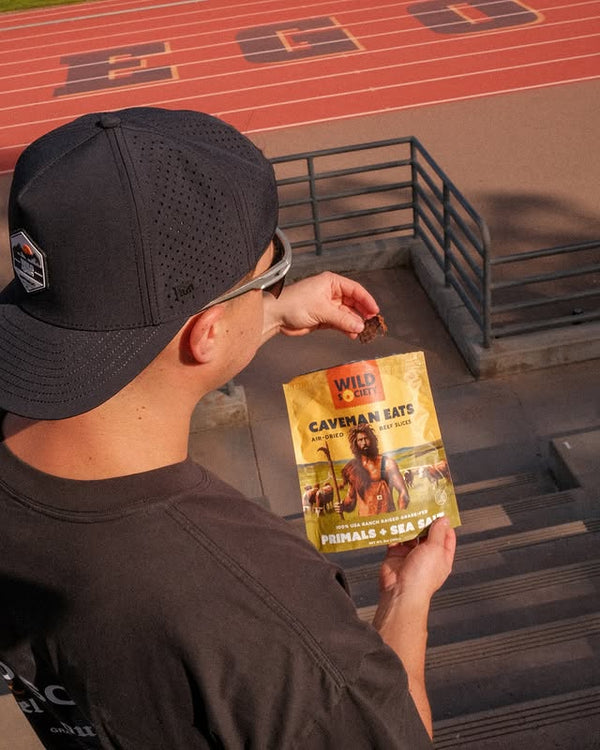
If you're shopping for jerky, here's the option that's technically something else. Our Caveman Eats uses whole-cut ribeye, slow-cooked into crisp steak slices with two ingredients. It's closer to a steak chip than a chewy strip or a slice of biltong.
These are typical preparation styles, with variation across producers. Jerky usually starts as lean strips; biltong dries larger pieces before slicing. Caveman Eats starts with whole-cut ribeye and uses slow cooking. Compare the process and texture first, then the actual package.
| Feature | Jerky | Biltong | Caveman Eats steak slices |
|---|---|---|---|
| Cut | Lean round or flank; sometimes trim | Whole silverside or similar cuts | Whole ribeye |
| Process | Marinated and heat-dried | Vinegar-cured and air-dried | Slow-cooked; no cure |
| Typical ingredient count* | 8–15 | 4–6 | 2 |
| Texture | Chewy | Soft to dry | Crisp, like a steak chip |
| Protein and stated quantity* | 9–11g per oz | Varies by product | 95g per 5oz bag |
*Category ranges are shopping guides, not fixed definitions; individual recipes and labels vary. Protein figures above use different stated quantities and are not equal-portion comparisons. Caveman Eats retains its package-label unit of 95g per 5oz bag.
These are category descriptions, not home-preparation instructions. The USDA's jerky safety guidance explains why removing moisture and controlling processing matter. A description of a traditional method is not enough to establish that homemade meat is safe.
For a crisp bite instead of a chewy strip or softer cured slice, choose the third format: whole-cut ribeye steak slices from Caveman Eats.

Biltong can use beef or other meats. Its characteristic vinegar, salt, and spice preparation differs from jerky's marinated strips and Caveman Eats' cooked steak slices. These are commercial process descriptions, not home-curing instructions.
Caveman Eats uses grass-fed whole-cut ribeye, two ingredients, and slow cooking at low temperatures. For more on cut selection, see our best meat for beef jerky guide. The crisp steak-slice option here is Caveman Eats.
Neither category wins on nutrition by name. Compare the actual ingredients, sodium, sugars, protein quantity, and portion you intend to eat. The process explains the style; the finished label explains the snack.
Our broader Is Beef Jerky Healthy? guide covers category nutrition in more detail. For this comparison, the useful answer is that preparation tells you the style, while the ingredients, label, and amount eaten tell you how the snack fits.
“Dried” does not mean that every product can be stored the same way in every condition. Moisture levels, packaging, and processing differ. Follow the label for the exact bag you buy, particularly after opening, and do not rely on a storage rule copied from a different product or a homemade recipe.
Biltong is not automatically healthier than jerky. Recipes differ, so compare the actual sodium, sugars, protein quantity, and portion. A low-sugar example from one category does not establish a rule for every bag.
Biltong is a well-known dried-meat tradition associated with South Africa, but it is not simply a new name for every form of beef jerky. The usual preparation, seasoning, slicing, and texture can differ. When choosing between them, read the actual product description rather than treating the names as exact substitutes. Both categories include variation in modern commercial products.
Calling all biltong healthy or unhealthy misses the product and the eating pattern. It can provide protein in a convenient format, while ingredients, sodium, portion, and the rest of your diet still matter. Inspect the exact label and use it as one food among a varied range. A category name is not enough information to judge an entire routine.
Whether biltong fits every day depends on the product, amount, and rest of your diet; there is no universal daily-bag recommendation here. Keep food choices varied and check the actual label rather than assuming frequent use is automatically beneficial. If your diet has specific restrictions, get individualized advice. A convenient protein snack should support the overall pattern, not replace variety.
Biltong supplies the body with nutrients from its meat and recipe, including protein that contributes to daily intake. It is a food, not a treatment or a guarantee of a training result. What it adds depends on the actual product and quantity eaten. Read the package and consider how it complements meals rather than expecting a special effect.
The main tradeoffs are texture preference, sodium, and storage needs. Check the exact package, particularly after opening. If you want a crisp bite rather than a softer cured slice, Caveman Eats offers a different format.
Biltong typically tastes beefy and savory, with vinegar tang and spice. Dryness and slicing change the bite. Caveman Eats has a crisp steak-chip texture, giving you a third choice alongside chewy jerky and softer-to-drier biltong.
You can eat biltong while trying to lose weight when its portion and calories fit your overall day. A protein snack does not cause weight loss by itself; replacing another food differs from adding an extra bag. Check the complete label, plan the amount, and keep meals varied. Choose a texture you enjoy within the eating routine you can sustain.
For a broader buying checklist, our high-protein beef jerky guide explains what to inspect. If ribeye steak slices and a two-ingredient recipe are the qualities you want, Caveman Eats brings them together in one bag.
This article is for general informational purposes and isn't medical advice.
Best Sellers
Use this text to share information about your collection with your customers.