If you’ve ever found yourself repeating the same workout week after week, you’re not alone.
Once you find something that feels productive, familiar, or efficient, it’s easy to keep going back to it. Maybe it’s lifting. Maybe it’s running. Maybe it’s long walks, classes, or a go-to circuit you can do half-awake.
But newer research suggests that when it comes to long-term health, doing more of the same may not be the smartest move.
A recent study published in BMJ Medicine followed more than 111,000 adults for over 30 years and found that people who regularly did a wider variety of physical activities had a lower risk of premature death, even after researchers accounted for total physical activity levels. In other words, it wasn’t just about how much people moved. Variety itself seemed to matter.
That does not mean your favorite workout is bad. It means your body may benefit from a more balanced weekly mix than many of us naturally default to.
What the study actually found
Researchers used long-term data from the Nurses’ Health Study and the Health Professionals Follow-Up Study, two major cohort studies that tracked exercise and health habits over decades. Participants reported activities such as walking, jogging, running, cycling, swimming, resistance training, yoga or stretching, yard work, and stair climbing.
The biggest takeaway was this: people with the highest exercise variety had a significantly lower risk of premature death than people with the lowest variety, even after adjusting for total activity. The relationship between total exercise volume and mortality also was not linear, which supports the idea that “more” is not always infinitely better.
For people who already care about fitness, that matters. A lot.

Why training variety may help
This was an observational study, so it cannot prove that exercise variety directly caused people to live longer. But it gives us a useful framework.
Different types of movement challenge the body in different ways.
- Strength training helps support muscle, power, and metabolic health.
- Walking adds low-stress movement and can be easier to recover from.
- Cardio can support endurance and heart health.
- Mobility and lower-intensity sessions can help people stay active more consistently over time.
That broader mix may help because it spreads stress across different systems instead of hammering the same joints, tissues, and energy pathways every day. It may also make training feel more sustainable, which is what matters if you want results that last longer than a few motivated weeks.
Doing more isn’t always the answer
For a lot of active people, the default response to a plateau is to add more.
More mileage. More classes. More intensity. More days in the gym.
Sometimes that works. Sometimes it just digs a deeper recovery hole.
This study points to a smarter idea: instead of always adding volume, consider whether your week is too one-dimensional. If your plan is all lifting and no conditioning, all cardio and no strength, or all hard days with almost no true recovery, you may be missing part of the bigger picture.
What a more balanced week can look like

Variety does not mean random workouts. You do not need to turn your week into a sampler platter.
For most people, it can look more like this:
- 2 to 4 strength sessions per week
- 1 to 2 cardio or conditioning sessions
- Daily or near-daily walking
- A little mobility, stretching, or lower-intensity movement
- At least one easier recovery-focused day
That kind of structure checks a lot of boxes. You are building strength. Supporting endurance. Keeping movement in your day even when life gets busy. And you are not asking one form of exercise to do everything.
Why this matters for recovery too
Training variety is not just a longevity concept. It is a recovery concept.
When every session asks your body to do the same thing at the same intensity, recovery becomes more fragile. One hard run may feel fine. Five repetitive impact-heavy sessions in a week is a different story. The same goes for lifting heavy every day without enough easier movement, mobility, hydration, sleep, or protein to support adaptation.
Mixing your training can help create more room for your body to recover and respond.
That is where your nutrition habits matter too. Protein helps support muscle repair. Hydration helps you stay ready for the next session. And enough overall fuel helps make your training sustainable instead of draining.
Build a smarter recovery routine
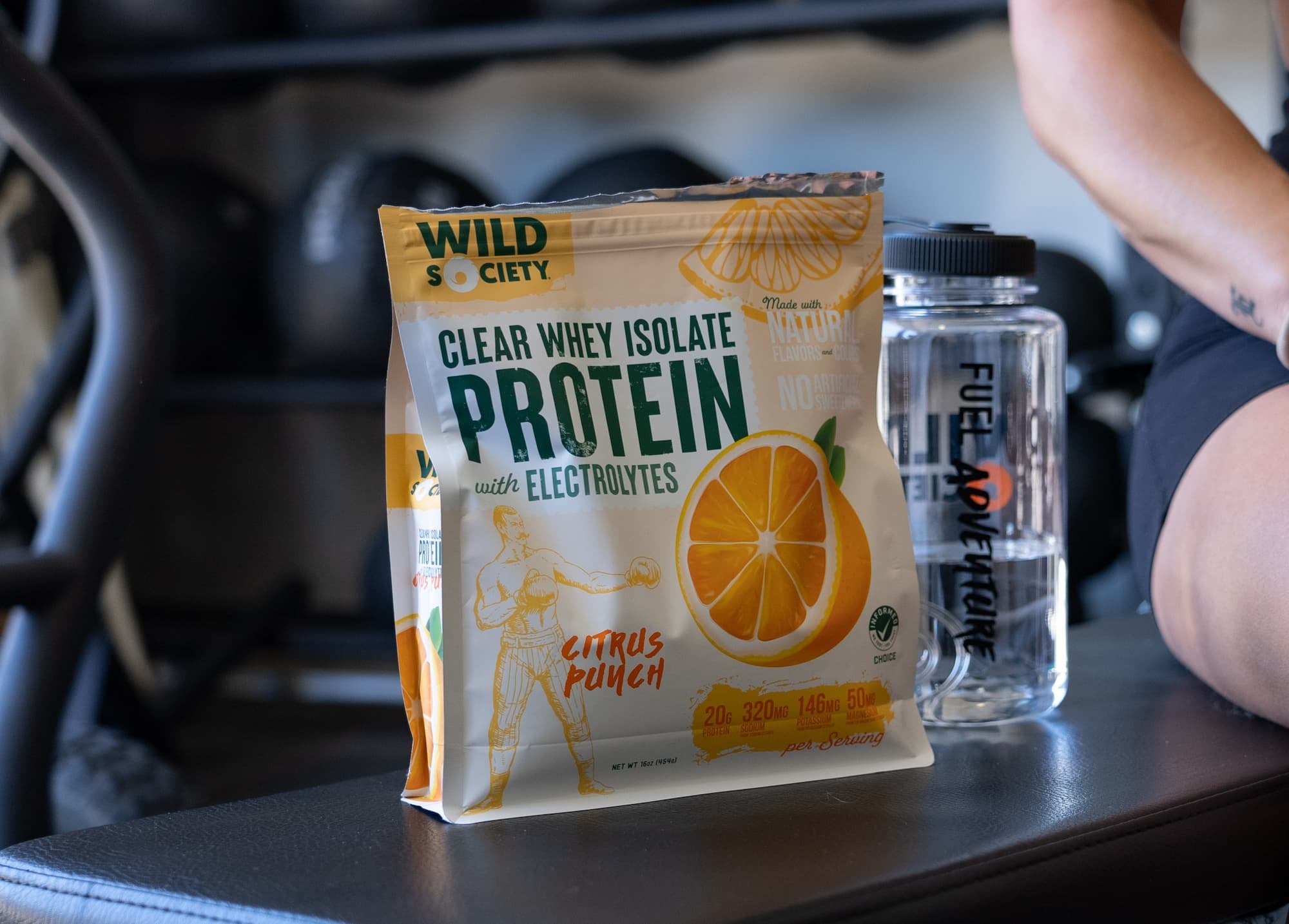
If your week includes a mix of lifting, cardio, and lower-intensity days, your recovery plan should be just as consistent. Wild Society’s clean protein options make it easier to support muscle repair and bounce back between sessions.

The Wild Society take
A smart routine is not built around proving how hard you can go every day.
It is built around staying active, building strength, recovering well, and having enough flexibility to keep going for the long term.
Some weeks that means lifting hard. Some weeks it means walking more. Some weeks it means dialing back intensity and focusing on recovery. All of that counts.
If this research gets one thing right, it is this: your body may benefit from a routine that includes more than one lane.
The bottom line
If you already exercise, the answer may not be to just do more.
It may be to do some different things on purpose.
A mix of strength, cardio, walking, mobility, and lower-intensity movement may support better long-term health than relying on the same workout over and over. That does not make your favorite form of training less valuable. It just means it may work even better as part of a more balanced whole.
Read next
Sources
Image by Trương Đình Anh; Diya Yoga; and Water Sports/ Pixabay