If you’ve ever cut carbs and felt great… and then suddenly hit a wall in your workouts, you’re not alone.
Carbs have gotten a bad reputation. But when it comes to performance, they’re not the enemy.
They’re a tool.
The difference isn’t whether you use carbs, it’s when and how you use them.
Why Carbs Matter for Performance
When you train hard, your body relies on glycogen, stored carbohydrates in your muscles, as a primary fuel source.
Once that runs low, everything changes:
That “why do I feel flat today?” feeling?
A lot of the time, it’s not motivation, it’s fuel.
The Biggest Mistake I See With Carbs
People go all-in one way or the other:
-
Too low: No energy, poor performance
-
Too high (at the wrong time): Energy spikes, crashes, sluggish workouts
The goal isn’t “more carbs.”
It’s strategic carbs.
When to Use Carbs for Performance
1. Before Your Workout (Fuel Up)
If you want to train hard, you need something in the tank.
Best timing: 30–90 minutes before training
What to aim for:
- Easily digestible carbs
- Low fat (so digestion is faster)
Examples:
- Banana
- Rice cakes
- Oatmeal
- Toast with honey
This helps you start strong instead of playing catch-up mid-workout.

2. During Long or Intense Workouts (Sustain Energy)
If you’re training longer than ~60 minutes or doing high-intensity work, carbs can help you maintain output.
Best for:
- Long runs
- Conditioning sessions
- Back-to-back training
Options:
- Sports drinks
- Simple carb sources (like gels or fruit)
This is about not hitting the wall.
3. After Your Workout (Recover Faster)
This is where most people underdo it or skip carbs entirely.
After training, your body is primed to:
- Refill glycogen
- Repair muscle
- Recover faster
What you want:
Carbs + protein
This combo helps your body actually bounce back instead of staying depleted.
How Many Carbs Do You Actually Need?
This depends on your training, but here’s a simple way to think about it:
- Light activity: Lower carb intake is fine
-
Moderate training: Add carbs around workouts
-
High intensity / frequent training: Carbs become essential
If your performance is dropping, recovery is slow, or workouts feel harder than they should, there’s a good chance you’re under-fueling.
Signs You’re Not Getting Enough Carbs
This is where it shows up fast:
- You feel strong at the start, then fade quickly
- Your workouts feel harder than usual
- You feel “flat” or low energy
- You’re sore longer than expected
- You’re craving sugar later in the day
That last one?
Your body is trying to catch up.

Carbs vs Fat Loss: Do You Have to Choose?
Short answer: no.
You don’t need to avoid carbs you just need to time them better.
When you place carbs:
- Around training: performance + recovery
- Late night / low activity: more likely stored
It’s not about cutting carbs.
It’s about earning them through activity.
The Smarter Way to Use Carbs
If you want a simple framework:
-
Train days: Add carbs before + after workouts
-
Rest days: Lower carbs, focus on protein + fats
-
Hard sessions: Increase carbs
-
Light sessions: Scale back
Think of carbs like fuel, not a constant.
Where Most People Get It Wrong
From years of training, here’s what I see:
- Cutting carbs too aggressively
- Not eating before workouts
- Skipping post-workout nutrition
- Relying on caffeine instead of fuel
Caffeine can help but it doesn’t replace energy. According to Tufts, It works primarily by blocking adenosine, a brain chemical that causes fatigue, rather than supplying actual fuel, effectively masking tiredness
What This Looks Like in Real Life
Here’s a simple example:
Morning workout:
- Banana before
- Protein + carbs after
Afternoon workout:
It doesn’t have to be complicated, it just has to be intentional.
A Smarter Way to Recover: Hydration + Protein Together
Most people think about recovery as two separate steps:
- Hydrate
- Then have a protein shake
But after training, your body needs everything at once:
- Fluids
- Electrolytes
- Protein
- And in some cases, carbs
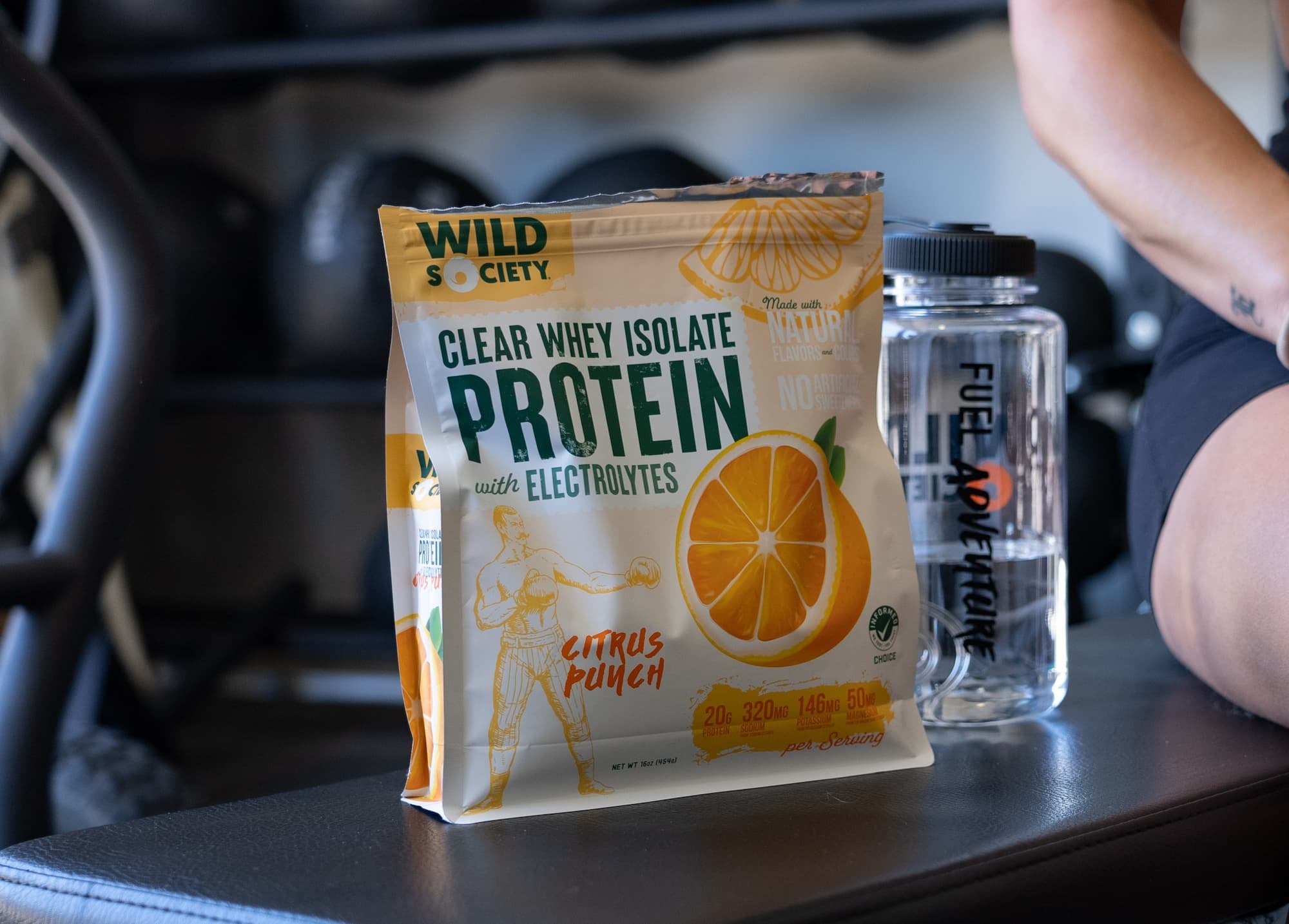
That’s exactly why we built Protein + Hydration at Wild Society Nutrition.

It’s a clear, refreshing drink that gives you:
- Electrolytes to rehydrate
- Protein to support muscle repair
- A lighter option than traditional shakes
If you’ve ever finished a workout and didn’t feel like drinking something heavy, but still wanted to recover properly, this solves that.
When to Use It
- Right after workouts (especially when you’ve used carbs pre/during)
- When you’re training frequently and need faster recovery
- When you want something easier than a full shake
The goal isn’t to replace carbs, it’s to support what carbs are doing.
Carbs fuel the work.
Protein repairs the muscle.
Hydration keeps everything moving.
When you bring those together, your recovery gets a lot more efficient—and your next workout feels better because of it.
Carbs + Hydration = Better Performance
One thing most people miss:
Carbs don’t work as well without proper hydration.
When you combine:
- Fluids
- Electrolytes
- Carbs (when needed)
- Protein (post-workout)
You get a much more complete recovery.
That’s where smarter products and smarter routines come in.
Final Take
Carbs aren’t good or bad.
They’re a tool.
Use them when your body needs them, and they’ll improve performance, recovery, and consistency.
Ignore them, or mistime them, and everything feels harder than it should.
Quick FAQ
Should I eat carbs before every workout?
If it’s intense or longer than ~45 minutes, yes. For lighter sessions, it’s optional.
Are simple carbs or complex carbs better?
Both have a place:
-
Before/during: Simple carbs (faster energy)
-
Daily meals: Complex carbs (sustained energy)
Can I train without carbs?
You can but performance will usually suffer, especially at higher intensity.
Will carbs make me gain weight?
Only if you’re consistently overeating. When used around training, carbs are more likely to be used for fuel and recovery.
Resources:
Tufts Now
Photos by Agustin Fernandez, Eiliv Aceron, and Monaz Nazary on Unsplash