Wild Society uses cookies and similar technologies to keep our site running smoothly, analyze traffic, personalize content, and serve relevant ads. Want to know more? View Privacy Policy or Preferences
Whey Protein vs Mass Gainer: Which Should You Buy?
Whey Protein vs Mass Gainer: Which Should You Buy?
Buy whey protein when you mainly need more protein; choose a mass gainer when you need a substantial addition of calories as well as protein. The whey protein vs mass gainer decision starts with what your meals are missing, then comes down to the serving you will actually use.
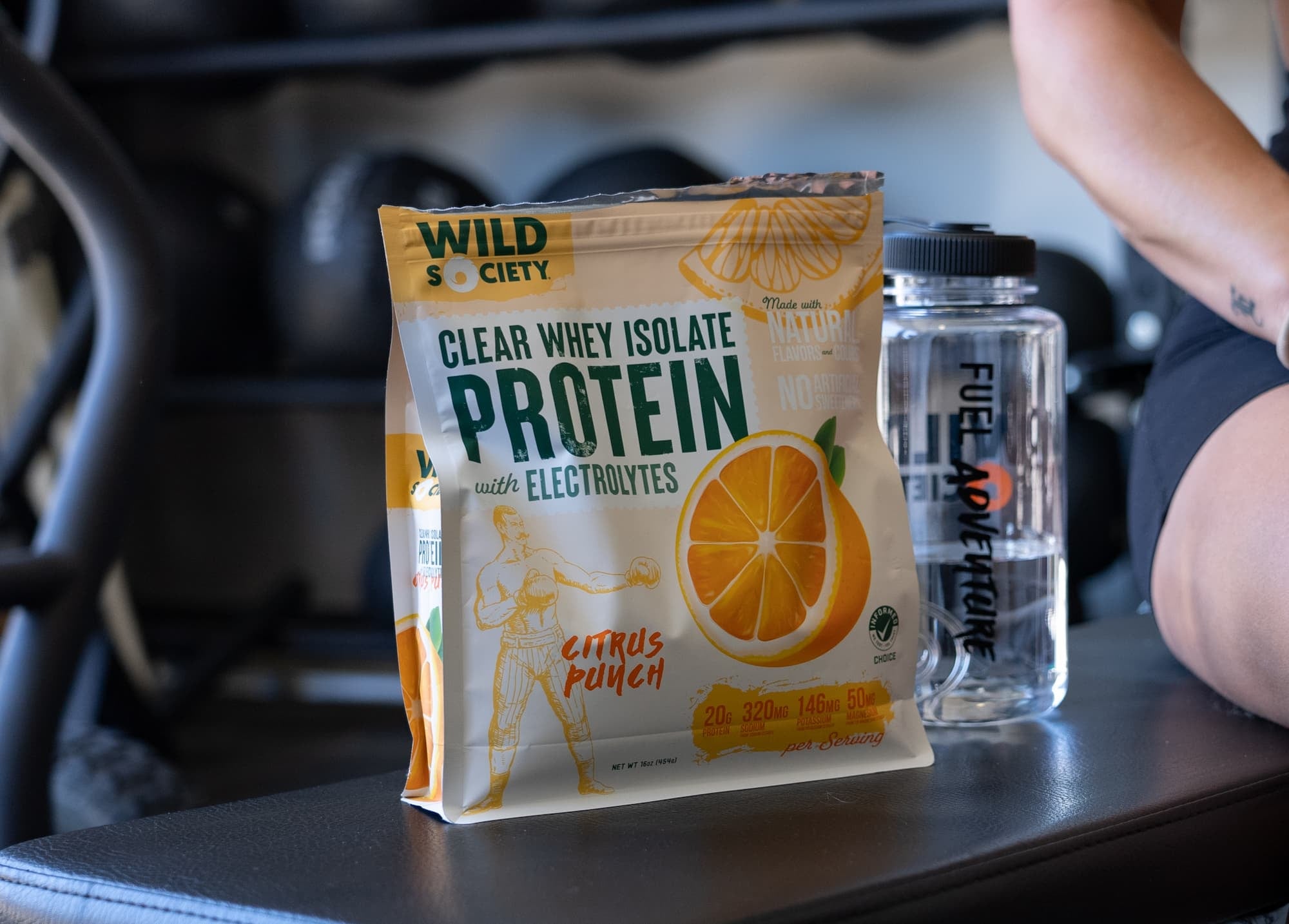
For a straightforward protein addition, Wild Society Nutrition Grass-Fed Whey provides 25g protein and 130 calories per 33g scoop in Vanilla Bean. If you prefer a fruit-style drink, WSN Clear Whey Isolate Protein + Electrolytes provides 20g protein and 90 calories per 28g scoop in Strawberry Coconut. Both give you a defined protein serving while leaving the rest of your food choices flexible.
Whey protein vs mass gainer: identify the gap
“Bulking” does not automatically make a mass gainer the better choice. If your meals already supply the calories you intend to eat but protein is harder to cover, whey is a direct way to address that shortfall. If getting enough total food into your day is the problem, a product designed around a larger calorie serving may be more convenient.
Should a skinny person choose whey or a mass gainer?
If you are thin and want to gain weight, use your meals and goals to identify the gap. Choose whey for an additional protein serving, or consider a gainer when you also want substantially more calories. For a creamy shake with a clear protein contribution, Grass-Fed Whey gives you 25g protein per labeled scoop.
Vanilla Bean: 25g protein | 130 calories per 33g scoop | 15 servings per pouch
Compare the label, not the scoop
A scoop is a measuring tool, not a standard nutrition unit. Compare the full labeled serving of each powder, its weight in grams, and the number of scoops needed to make it. A mass gainer’s headline calories may refer to a much larger serving than a whey powder’s.
Powder servings mixed with water, without milk or other additions
What to compare
WSN Grass-Fed Whey, Vanilla Bean
WSN Clear Whey, Strawberry Coconut
A typical mass gainer (illustrative)
Primary fit
Protein addition in a creamy shake
Protein addition in a fruit-style drink
A larger calorie addition combining protein, carbohydrate and fat
Labeled serving
1 scoop, 33g
1 scoop, 28g
2 scoops, 199g
Protein
25g
20g
53g
Calories
130
90
770
Carbohydrate
2g
1g
110g
Fat
2.5g
0g
15g
Total sugars / added sugars
2g / 0g
0g / 0g
12g / 0g
Servings per package
15
16
15
Price per labeled serving
About $2.33 at $34.99 per pouch
About $2.50 at $39.99 per pouch
Varies; divide package price by labeled servings.
Preparation
Add the chosen liquid separately to your nutrition total
Water keeps the powder’s listed nutrition unchanged
Water keeps the powder's listed nutrition unchanged
A carbohydrate blend primarily adds carbohydrate; a mass gainer combines protein with other calorie sources. For a low-carb mass gainer, check where its calories come from and how much protein and fat the serving provides. The carbohydrate content and total serving still matter more than the category name.
The WSN figures describe the named flavors and labeled servings, using WSN's labels and one-time prices checked October 20, 2026. The mass-gainer column is illustrative of a common label format, not a specific product. The 199g mass-gainer serving is much larger than either WSN scoop; its higher calories come with substantially more powder and carbohydrate. Different flavors, portions and mixing liquids can change the comparison. WSN's whey powders provide defined protein servings that you can use alone or build on with food.
Vanilla Bean Grass-Fed Whey Nutrition Facts and ingredient list.Strawberry Coconut Clear Whey Nutrition Facts and ingredient list.
When a whey powder fits
Choose whey when a measured protein serving is the main purchase goal. The NIH Office of Dietary Supplements explains that protein supports muscle maintenance and repair and helps support the response to exercise. A powder contributes protein to that broader eating and training routine; it does not guarantee muscle gain.
There is no universal “number one protein” for muscle gain. A useful choice supplies the protein you need in a format you enjoy and can use consistently. Grass-Fed Whey suits a creamy shake. Clear Whey suits someone who wants a fruit-style drink instead.
Strawberry Coconut Clear Whey supplies 20g protein, 90 calories, 320mg sodium, 147mg potassium, and 52mg magnesium per 28g scoop. Its defined protein serving and lighter drink format make it a practical starting point when a large shake does not fit your preference.
Strawberry Coconut: 20g protein | 90 calories | 320mg sodium | 147mg potassium | 52mg magnesium per 28g scoop | 16 servings per pouch
WSN Strawberry Coconut Clear Whey pouch beside a pink drink.
For the texture and format decision, see Clear Whey vs Regular Whey Protein. That choice is separate from deciding whether you need a calorie-focused gainer.
When additional calories are the main goal
A mass gainer can fit when you want protein and a larger amount of food energy in one prepared serving. Its convenience is the combined formula. Compare the actual protein, carbohydrate, fat, and calories instead of assuming that the biggest calorie number makes it the best purchase.
You can also build a more substantial shake around whey and ordinary foods. A creamy Vanilla Bean shake can accommodate additions such as milk, oats, banana, or nut butter, depending on your preferences. Amounts and brands determine the finished nutrition. Grass-Fed Whey gives that shake a defined starting point: 25g protein and 130 calories per scoop.
Vanilla Bean: 25g protein | 130 calories per 33g scoop | 15 servings per pouch
Decide how much flexibility you want
A premixed gainer supplies its ingredients in a fixed ratio. If you reduce the serving, you reduce its protein, carbohydrate, fat, and calories together. That can be useful when the formula matches your needs, but the ratio matters as much as the headline number.
A food-added whey shake lets you choose the additions separately. You can keep the same labeled scoop of Grass-Fed Whey while changing the amount or type of food you blend with it. That offers control over flavor, texture, and the source of extra calories, although it takes more preparation than shaking one powder with water.
Choose a premixed gainer for convenience when its full or planned partial serving fits the protein and calorie contribution you want.
Choose whey plus food for flexibility when you want a defined protein base and prefer to choose your other ingredients.
Choose whey alongside meals or snacks when you prefer eating your additional food instead of drinking a larger shake.
None of these options becomes a complete meal simply because it contains more calories. If your purchase needs to replace a meal, use the separate Protein Shake vs. Meal Replacement guide to evaluate that different job.
Make the serving comparison work for your routine
Before buying, write down the serving you intend to use and evaluate that amount throughout. This keeps the comparison useful when one product’s label lists a single scoop and another requires multiple scoops.
1. Separate powder from the mixing liquid
Plain water contributes no protein or calories. Milk, juice, and other mixing ingredients can change the finished total. A large prepared-shake number should not be compared directly with the powder-only figures in the table.
For a measured example, one 33g scoop of WSN Grass-Fed Whey Vanilla Bean supplies 130 calories and 25g protein. One cup of whole milk adds about 150 calories and 8g protein, bringing that shake to about 280 calories and 33g protein before any other ingredients. Check your milk carton for its exact serving and nutrition. Grass-Fed Whey gives you a defined protein base, with room to choose the additions that suit your shake.
Finished shake total = powder contribution + liquid contribution + any added foods. Use nutrition labels and measured portions for every part. This avoids crediting a powder with nutrition supplied by the milk or other ingredients.
2. Check what a partial serving changes
Half of that illustrative 199g serving is 99.5g of powder. Calculated from the illustrative values, that portion supplies approximately 385 calories, 26.5g protein, 55g carbohydrate and 7.5g fat when mixed with water. Halving a serving halves every nutrient, not just calories. For comparison, the labeled 33g WSN Vanilla Bean scoop supplies 25g protein and 130 calories, giving you a smaller protein base when you prefer to choose additional food separately.
Serving weight is especially helpful here: compare the grams you use with the grams in the labeled serving. A powder scale can make that amount easier to reproduce than estimating part of a scoop. Keep the product’s instructions in view when deciding how to prepare it.
3. Calculate package value at the same serving size
WSN Grass-Fed Whey’s $34.99 pouch contains 15 labeled servings, making each serving about $2.33. Strawberry Coconut Clear Whey’s $39.99 pouch contains 16, or about $2.50 per serving. Those prices buy different protein amounts and drink formats, so price alone does not settle the choice.
Apply the same calculation to a gainer:
Full-serving cost: package price divided by the number of labeled servings.
Planned portion: establish how much of a labeled serving you will use.
Matching nutrition: use the protein and calories for that same portion.
Prepared cost: include milk or food additions if you want to compare the finished shake.
A large container is not automatically better value. If its labeled serving uses considerably more powder, the package may contain fewer servings than its size suggests. Likewise, a lower-cost partial serving is a smaller nutrition contribution, not the full serving at a discount.
4. Match the purchase to the gap you identified
Consider two different shopping situations. One person is comfortable with their meals and wants a convenient protein addition. Another wants a more substantial drink because fitting additional food into the day is difficult. They can share a muscle-building goal while needing different purchases.
For the first situation, compare the labeled WSN whey serving with the protein contribution you want. For the second, compare the whole prepared drink with the calorie contribution you want, while still checking its protein. This is why “better for bulking” has no single category answer.
A useful purchase should make your routine easier to follow. Consider whether you have a blender, need a portable shaker, prefer a creamy or fruit-style drink, and want to buy additional ingredients. These practical differences affect whether the serving you calculated becomes the serving you actually use.
Can you combine whey and a mass gainer?
You can combine them, but first check the gainer’s protein sources and nutrition. Some gainers already include whey. Adding a second powder adds its nutrition to the existing serving; it does not create a separate guaranteed muscle-building benefit.
For example, adding one labeled scoop of Vanilla Bean Grass-Fed Whey contributes another 25g protein and 130 calories to whatever the gainer provides. Any milk or food additions still belong in the final total. That is simple addition, not a recommendation that everyone should use both.
Write down the protein and calories in the gainer portion you actually plan to prepare.
Add the contribution from your mixing liquid and other ingredients.
Compare that total with the purpose of the shake in your day.
Add whey only if you want the additional protein and calories it supplies.
If the gainer already covers the contribution you want, another powder may simply duplicate it. If you want more control over the ratio, Grass-Fed Whey with separately chosen foods lets you build the drink from a defined protein serving.
Do not confuse this choice with isolate versus concentrate. The U.S. Dairy Export Council distinguishes whey ingredient categories, while a finished flavored powder’s label tells you what its serving contains. WSN’s whey protein isolate versus concentrate guide covers that separate comparison.
Practical questions
Is whey protein a complete protein?
Yes. Whey contains all nine essential amino acids and is identified as a complete protein by the NIH Office of Dietary Supplements. “Complete protein” describes its amino acids. It does not mean a whey shake supplies everything needed for a complete meal.
Can beginners use whey protein?
Adult beginners can use whey as a convenient protein source; it is not reserved for experienced lifters. Start with the role it will play in your meals, then choose the labeled serving and format that fit. Check the ingredients and allergen information before buying. A beginner looking for a simple protein addition can choose Grass-Fed Whey for a creamy shake or Clear Whey for a fruit-style drink.
Choose your WSN whey starting point
For a creamy protein base you can prepare simply or blend with food, choose WSN Grass-Fed Whey. Vanilla Bean provides 25g protein and 130 calories per 33g scoop, with 15 servings per pouch.
For a fruit-style protein drink, choose Clear Whey Isolate Protein + Electrolytes. Strawberry Coconut provides 20g protein and 90 calories per 28g scoop, with 16 servings per pouch.
If you would rather try the format before buying a pouch, the available Rocket Pop Clear Whey single-serve pack provides 20g protein for $4.99. It is a different flavor from the Strawberry Coconut powder compared above. Choose Rocket Pop for a low-commitment way to try WSN Clear Whey.