A low carb protein powder should give you the protein you want with a total-carbohydrate amount that fits your daily plan. Whey isolate is often a useful starting point, but some whey concentrates, egg proteins, and plant-protein formulas also fit. Compare the label for the exact flavor and serving rather than judging only by the protein category.
The most useful comparison includes what goes into the finished drink. A powder mixed with water has a different carbohydrate total from the same powder blended with milk, fruit, or oats. This guide shows how to compare sources, read the relevant label lines, and choose between current WSN options.
What counts as a low carb protein powder?
For everyday shopping, focus on the number of grams of total carbohydrate per labeled serving. A phrase such as “low carb” is less useful than that number because serving sizes and recipes differ. There is no need to treat one arbitrary cutoff as a universal nutrition rule. Choose a product that fits the amount of carbohydrate you want from this part of your day.
Start with protein, serving weight, total carbohydrate, and calories. Then read total sugars, added sugars, and dietary fiber. These lines answer different questions. A product with 0g added sugars can still contain naturally occurring sugar or other carbohydrates, while a drink that tastes sweet may use a small amount of a high-intensity sweetener.
If you are specifically comparing the lowest carb protein powder options, keep the protein dose in view too. A small scoop with fewer carbohydrates may simply provide less protein. The comparison is more useful when both products deliver a similar amount of protein or when you clearly state why you prefer one serving size.
Which protein sources fit a low-carb diet?
Protein sources: what the name tells you and what to check
| Source |
Useful feature |
Label check |
| Whey isolate |
Complete milk protein with much of the original fat and lactose removed |
Carbohydrate in the finished formula; milk allergen |
| Whey concentrate |
Complete milk protein, often used for creamy shakes |
Exact flavor's carbohydrate, sugar, and fat |
| Casein |
Complete milk protein; commonly makes a thicker shake |
Carbohydrate and additions in the finished recipe |
| Egg-white protein |
Complete protein without dairy ingredients in the protein source itself |
Egg allergen, other ingredients, and carbohydrate |
| Soy or complementary plant blend |
An option for people avoiding animal-derived protein |
Protein amount, amino-acid coverage, allergens, and carbohydrate |
| Collagen peptides |
A different amino-acid profile from whey |
Not a one-for-one substitute for complete protein for muscle goals |
Low carb whey protein can be either an isolate or a concentrate, depending on the formulation. Isolate generally contains a higher proportion of protein in the ingredient itself, but flavorings and other additions affect the final product. A concentrate with a modest carbohydrate amount may suit your routine just as well. Our whey isolate versus concentrate guide explains the processing distinction.
Plant-based does not automatically mean high carbohydrate, and dairy-based does not automatically mean zero carbohydrate. Read the actual label. If you need to avoid milk because of an allergy, a low-lactose whey product is still milk-derived and is not a suitable substitute for a milk-free option.
Collagen can have a low carbohydrate amount, but that alone does not make it equivalent to whey. Protein quality matters when the goal is muscle support or filling a general protein gap. See the fuller collagen protein versus whey protein comparison before choosing solely by the carbohydrate line.
Compare WSN protein powder labels
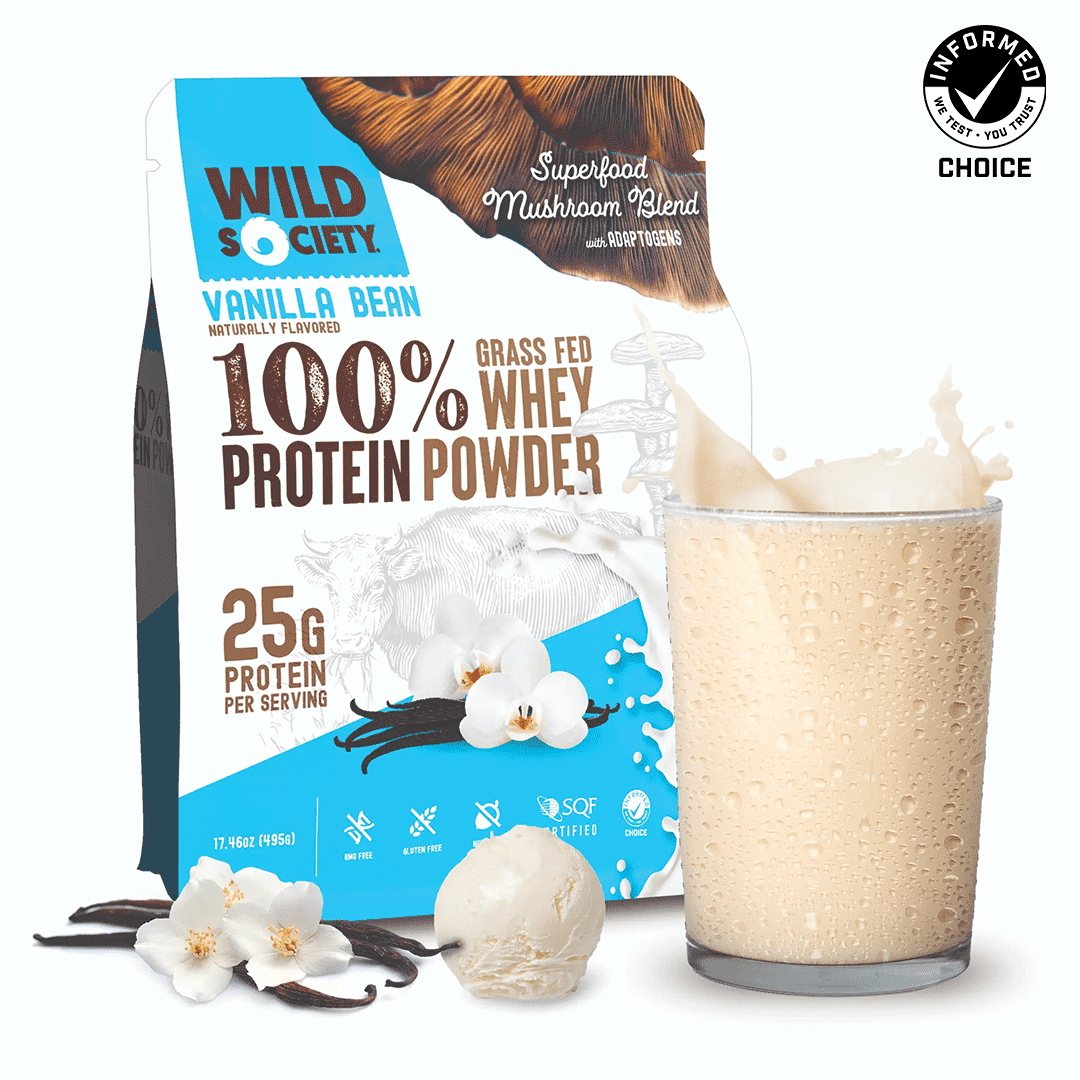
These examples use the published labels for Clear Whey Isolate Strawberry Coconut and Grass-Fed Whey Vanilla Bean. Flavor matters: do not assume a number shown for one recipe applies to every flavor or a future formulation. Check the package you receive, particularly when tracking closely.
WSN powder comparison, before adding a mixer
| Published label |
Clear Whey Isolate, Strawberry Coconut |
Grass-Fed Whey, Vanilla Bean |
| Serving |
1 scoop, 28g |
1 scoop, 33g |
| Protein |
20g |
25g |
| Calories |
90 |
130 |
| Total carbohydrate |
1g |
2g |
| Total sugars |
0g |
2g |
| Added sugars |
0g |
0g |
| Dietary fiber |
0g |
0g |
| Milk allergen |
Yes |
Yes |
Both examples can fit a carbohydrate-conscious routine, with different drink styles. Clear Whey is the lighter, fruit-flavored option designed for water. Grass-Fed Whey is the creamier choice for vanilla or chocolate shakes and compatible recipes. The difference between 1g and 2g carbohydrate is only one part of that decision; serving size, protein amount, flavor, and how you prepare the drink also matter.
For a water-based drink with 20g protein and 1g total carbohydrate in the Strawberry Coconut serving shown, choose Clear Whey Isolate. Its formula includes electrolytes as well as protein. If you prefer a creamy shake with 25g protein and 2g total carbohydrate in the Vanilla Bean serving shown, consider Grass-Fed Whey Protein.
Count the carbs in the whole drink
Do protein shakes have carbs? Many do, even when the powder is relatively low in carbohydrate. The finished total depends on the powder, number of servings, mixer, and anything else you add. Use this simple calculation: powder carbohydrates + mixer carbohydrates + other ingredients = total carbohydrates in the drink.
Water contributes no carbohydrate. Adding more water changes the drink's concentration and taste but does not remove the carbohydrates already in the powder. Using two servings of powder doubles that powder's labeled contribution. Ice similarly changes temperature and dilution, not the original nutrient amount.
Fruit, oats, sweetened milk, syrups, and nut butters can all change the finished totals. Those ingredients can be useful in a meal, but include them in your calculation when carbohydrate is the specific constraint. A smoothie and a protein powder mixed with water are different products nutritionally, even when both start with the same scoop.
Total carbs and net carbs are different measurements
The total-carbohydrate line gives you a consistent starting point. “Net carbs” commonly involves subtracting fiber and sometimes sugar alcohols, but calculation practices vary. Follow the approach appropriate to your plan instead of assuming every front-of-pack net-carb number was calculated identically. The two label examples above list 0g fiber, so fiber subtraction does not change their carbohydrate totals.
The FDA's label guide explains serving size and the distinction between total and added sugars. It is useful when comparing products because it keeps the underlying label categories clear. If a clinician has given you a specific carbohydrate-counting method, use that method consistently.
Compare protein powders on an equal-protein basis
A scoop is a serving tool, not a universal measurement. The two WSN scoops above have different weights and provide different protein amounts. Comparing their labeled servings is useful for preparing a drink, but an equal-protein calculation can help explain what those figures mean.
For an illustrative 20g-protein comparison, the Clear Whey Strawberry Coconut label already supplies that amount in one 28g scoop, with 1g carbohydrate and 90 calories. Scaling the Vanilla Bean label mathematically to the same protein amount gives 26.4g of powder, about 1.6g carbohydrate, and 104 calories. This is label-based arithmetic, not a separate serving recommendation; it assumes the powder is evenly mixed and uses rounded label values.
The calculation shows why “one scoop versus one scoop” is not the only useful comparison. It also shows that the decision is not just a contest between 1g and 2g carbohydrate. For normal preparation, use the package serving, then choose the light fruit flavor of Clear Whey or the creamy format of Grass-Fed Whey.
Three finished-drink examples
These examples use one full labeled serving of WSN powder. Water adds no carbohydrate, protein, or calories. For the milk example, Silk Unsweet Almondmilk's published label lists 30 calories, 1g carbohydrate, and 1g protein per cup. Another milk or flavor requires a new calculation.
Label-based drink totals before any additional ingredients
| Preparation |
Protein |
Total carbohydrate |
Calories |
| Strawberry Coconut Clear Whey + water |
20g |
1g |
90 |
| Vanilla Bean Grass-Fed Whey + water |
25g |
2g |
130 |
| Vanilla Bean Grass-Fed Whey + 1 cup Silk Unsweet Almondmilk |
26g |
3g |
160 |
These totals are calculated from labels, not laboratory analysis of a prepared drink. The almondmilk version contains almond as well as the powder's milk allergen. If you add fruit, oats, syrup, or a second scoop, add those contributions rather than continuing to use the table's total.
For a low-carbohydrate shake, the mixer may be the simplest variable to change. For a fuller breakfast, additional ingredients may be useful even when they increase carbohydrate. Both are legitimate recipes; the key is knowing which job you want the drink to do. Grass-Fed Whey provides the creamy protein base for either approach.
Choose a protein source for your dietary needs
Low carb and keto are related, but not identical
A powder can be low in carbohydrate without making the rest of a diet ketogenic. If you follow a carbohydrate target, count the complete drink within that target; no product label alone proves that you will remain in ketosis. For a shopper simply reducing added sugar, the added-sugars line may be the more relevant starting point. Keep those two goals separate when comparing claims.
Whey isolate versus concentrate
Use the final label to decide, rather than assuming isolate always has the lowest carbohydrate or concentrate always has too much. An isolate ingredient is more concentrated in protein, but the flavored finished formula includes other ingredients. WSN's two examples both have modest carbohydrate amounts and offer different flavors and textures, so the format you enjoy can be the deciding factor.
When milk-derived protein does not fit
For a milk allergy or vegan preference, neither WSN whey option fits that restriction. Egg-white protein is an animal-derived option for someone avoiding milk who tolerates egg; soy or an appropriate plant blend can suit a plant-based preference. Compare the protein source, serving, and complete formula rather than assuming that plant-based automatically means high carb. If milk fits your diet, return to your preferred drink style when choosing between Clear Whey and Grass-Fed Whey.
What is the best protein powder with low carbs?
The best fit is the formula that meets your protein needs, dietary restrictions, and preferred preparation with a carbohydrate amount you can account for. For a light fruit-flavored drink, Clear Whey is a natural WSN choice. For creamy shakes and coffee-compatible vanilla or chocolate flavors, Grass-Fed Whey offers a different format. Start with how you will use it, then compare the label.
Check the ingredient list as well as the nutrition panel. Sweeteners, gums, flavors, and emulsifiers have different functions; their presence does not establish how many carbohydrates a serving contains. Avoid guessing from whether an ingredient sounds familiar. Our protein-powder selection checklist explains how ingredient information and testing evidence fit together.
Low-carb protein powder questions
Can I have protein powder on a low carb diet?
Yes, provided the serving and finished drink fit your carbohydrate plan. Check the powder's total carbohydrates, then add the contribution from milk and other ingredients. Protein powder is a convenient food addition rather than a complete diet. Use it alongside varied meals, and choose a protein source that fits your dietary needs and preferences.
Is there a protein powder without carbs?
Some products list 0g carbohydrate per labeled serving. That is a product-specific label value, not a guarantee that every powder of the same type has zero carbohydrates. A zero-carbohydrate powder can also become a carbohydrate-containing drink when mixed with milk or other ingredients. Compare the exact serving and the complete recipe before choosing.
What is the best protein powder with zero carbs?
There is no universal best choice. Consider complete protein, allergies, flavor, testing information, and the amount you will use. If your plan allows a small amount of carbohydrate, a 1g or 2g option may give you the preparation and taste you prefer. The WSN examples above provide transparent numbers without describing them as zero-carb products.
What food is high in protein but has no carbs?
Some plain animal foods provide protein with little or no carbohydrate, but preparation changes the answer. Sauces, breading, and sweet marinades can add carbohydrates. For a portable option, Caveman Eats' published label lists 0g total carbohydrate per labeled serving and the product supplies 95g protein per 5oz bag. Compare it with the role a drink would fill in your day.
Why do doctors say no to protein powder?
There is no blanket rule that clinicians reject protein powder. They may recommend a different approach for a person's medical needs, allergies, medications, or overall diet. If you have been advised to limit protein or follow a medical diet, check the exact product with your clinician. For routine use, choose an appropriate formula and count it within your daily intake.
For help deciding how a shake fits around meals, see how many protein shakes a day is reasonable. Once you know the gap you want to fill, choose the flavor and format you will use consistently: Clear Whey Isolate or Grass-Fed Whey Protein.
This article is for general informational purposes and isn't medical advice.