The cleanest protein powder for your needs is one with an appropriate protein source, understandable ingredient functions, clear nutrition information, and testing evidence you can verify. A short ingredient list can be useful, but it is not a laboratory result. Choose by those concrete checks rather than a single word on the front of the package.
This guide explains how to assess a clean ingredient protein powder without confusing sourcing preferences, nutrition, and certification. It also applies the checklist to WSN's Grass-Fed Whey and Clear Whey using specific published labels and links to the relevant certification directory.
What does clean protein powder mean?
People use “clean” to mean different things: a simple recipe, particular sweetener preferences, clear sourcing, or evidence about product quality. Define what matters to you before comparing packages. The word alone cannot tell you the amount of protein, the allergen profile, or which tests have been performed.
A useful decision has four parts. First, choose a protein source that fits your dietary needs. Second, understand the other ingredients and why they are there. Third, compare the serving and nutrition. Finally, check the scope of any testing or certification claims. Each answers a different question; none should be used as a substitute for the others.
A practical clean-protein checklist
| Check |
What to look for |
What it does not establish |
| Protein source |
A named source that fits your goal and dietary needs |
The complete product's contaminant levels |
| Ingredient list |
Clear ingredients and functions you understand |
That fewer ingredients always means safer or better |
| Nutrition label |
Protein, serving size, calories, carbohydrate, and sugars |
That every flavor has the same numbers |
| Certification |
A matching product entry and the program's stated scope |
Every possible quality claim or health outcome |
| Laboratory report |
Product or batch identity, date, analytes, units, and results |
A permanent conclusion about all future batches |
Read the ingredient list by function
Begin with the protein ingredient: whey concentrate, whey isolate, soy protein, a complementary plant blend, or another named source. For general muscle-focused use, consider complete-protein quality as well as the total grams. For the distinction between common whey ingredients, see whey isolate versus concentrate.
Next, identify the ingredients that affect flavor, sweetness, texture, and mixing. A gum may thicken a drink, lecithin may help ingredients disperse, and citric acid may provide a tart flavor. Naming those functions is more useful than calling every unfamiliar ingredient a filler. Decide which functions and taste preferences matter to you.
If you prefer stevia-sweetened products or want to avoid a particular flavoring, check the exact formula. Preferences are legitimate buying criteria, but they should not be presented as proof that every alternative is harmful. The same applies to natural and artificial descriptions: they do not replace a review of the complete product or its testing evidence.
Read allergen information separately. Whey is milk-derived whether it is clear or creamy. A product can fit someone's carbohydrate preference while being unsuitable for their milk allergy. For multiple dietary restrictions, review the package carefully rather than relying on a broad “clean” description.
Check the protein and nutrition label
Find the serving weight and number of scoops before comparing protein grams. Then review calories, carbohydrate, total sugars, added sugars, and any other nutrients relevant to your needs. A label example for one flavor is not evidence that every flavor is identical. The package you use is the reference for your own tracking.
For example, WSN's published Grass-Fed Whey Vanilla Bean label lists 25g protein, 130 calories, 2g total carbohydrate, 2g total sugars, and 0g added sugars per 33g scoop. Its Clear Whey Strawberry Coconut label lists 20g protein, 90 calories, 1g total carbohydrate, and 0g total and added sugars per 28g scoop. Both contain milk.
Those numbers describe different serving sizes and formulas. They help you select a format, not declare a universal winner. If carbohydrate is the main constraint, our low-carb protein powder guide compares the label and the finished drink. The mixer matters: water, milk, and a smoothie recipe produce different totals.
Verify what third-party testing covers
“Third-party tested” is a starting point for a question, not a complete answer. Identify the organization, the product, and the scope. A banned-substance screening program addresses a different question from a report measuring particular heavy metals. A manufacturing audit also serves a different purpose from testing an individual finished-product batch.
For a certification claim, follow the certifier's directory rather than relying only on a logo in a product image. Match the product name, formulation, and region where relevant. If the program provides batch records, compare the number on your package with the listed record. If a batch is not displayed, ask the brand or certifier for the matching information rather than assuming a different entry applies.
WSN's Grass-Fed Whey formula and Clear Whey Isolate + Electrolytes formula have product entries in the Informed Sport directory. Use those entries to check the named products and current information. A directory listing should be described within the program's scope, not turned into a claim that the product has the lowest level of every contaminant.
Other programs have their own requirements. For example, NSF explains its dietary-supplement certification in terms of label claims, formulation review, and contaminant review. Learn what a program evaluates before comparing badges across products. A facility's credentials are not automatically the same as certification of every product made there.
How to read a contaminant report
If a brand supplies a report, first check that it identifies the product and, where applicable, the batch. Look for the laboratory, test date, substances measured, units, and reporting limits. A number without a unit cannot support a useful comparison. Neither can a screenshot that removes the product identity or test details.
Keep concentration separate from exposure per serving. For example, a report expressed per gram requires the serving weight before it can be compared with a per-serving result. “Not detected” also refers to the test's detection limit; it does not mean the laboratory proved absolute zero. These distinctions help you compare the evidence without exaggerating what it says.
Do not rank one formula as “least contaminated” without comparable data for the products, analytes, units, and batches being ranked. It is possible to make a strong shopping choice without inventing that league table: choose the protein and recipe that suit you, then seek evidence that addresses the particular quality question you have.
Walk through two real WSN ingredient labels
Instead of judging a powder by whether every ingredient sounds familiar, read the list as a recipe. Identify the protein first, then the ingredients responsible for sweetness, flavor, texture, and other intended features. This method lets you compare two different drink styles without assuming they should have identical ingredient lists.
What the published WSN labels tell a shopper
| Ingredient group |
Vanilla Bean Grass-Fed Whey |
Strawberry Coconut Clear Whey |
Decision it helps answer |
| Protein |
Whey protein concentrate |
Whey protein isolate |
Both are milk-derived; which drink format fits? |
| Sweetness and flavor |
Stevia and natural flavors |
Stevia and flavoring in a fruit-inspired formula |
Does the flavor and sweetener approach suit you? |
| Other formula features |
Xanthan gum, sunflower lecithin, and a mushroom/herb blend |
Electrolyte salts, acids, and mixing-related ingredients |
What else are you choosing with the protein? |
| Nutrition example |
25g protein and 0g added sugars per 33g scoop |
20g protein and 0g added sugars per 28g scoop |
How does the labeled serving fit your routine? |
This is a reading guide, not a substitute for the full ingredient panel. For example, a shopper seeking only unflavored protein should notice that Grass-Fed Whey also includes a mushroom/herb blend. A shopper wanting a fruity protein drink should notice the additional ingredients that make that format possible. Choose the recipe intentionally: creamy Grass-Fed Whey or fruit-flavored Clear Whey.
How to compare “natural,” “organic,” and “grass-fed” claims
Keep each claim attached to the part of the product it describes. An organic ingredient in a blend does not by itself establish that the entire finished powder is certified organic. Grass-fed describes a sourcing characteristic; it does not establish that the final product is free of all contaminants. A natural-flavor description does not tell you the protein amount or whether the full recipe fits an allergy.
These distinctions do not make sourcing preferences unimportant. They help you use them accurately. A shopper may value grass-fed whey and also want an exact nutrition label and a product-specific certification record. Those are complementary checks rather than competing reasons to choose a product.
What a certification check can establish
Use the linked Informed Sport entries as a worked example of the process. Search for the complete product name, not only “Wild Society.” The Grass-Fed Whey entry names a formula with a superfood mushroom blend; the Clear Whey entry identifies protein plus electrolytes. Confirm that the entry describes the formula on the package you intend to buy.
- Match the product and formulation. Similar brand names do not make entries interchangeable.
- Read the program's testing scope. Informed Sport concerns banned-substance testing; do not translate that into a claim about the lowest heavy-metal levels.
- Check any available flavor, region, or batch details against your package.
- If a batch record is absent or unclear, request the matching record from the brand or certifier instead of substituting a different lot.
A manufacturer can provide useful additional evidence, but the evidence still needs an identity. A report without a product name or a relevant batch cannot answer a question about your exact package. Likewise, a report for one substance does not establish results for substances it did not test. Those are limits on the conclusion, not a reason to ignore properly identified evidence.
What a useful testing response should contain
If testing information matters to your purchase, ask a concrete question: “Can you provide the product or batch identification, laboratory, test date, substances measured, units, and results for this formula?” That is more actionable than asking whether the powder is clean. You can then compare the response with the claim being made.
There is no comparative WSN laboratory dataset presented in this guide that establishes a lowest-contaminant ranking. The practical WSN examples are the published ingredient and nutrition panels plus the named product-directory entries. Together, they support a more specific decision about Grass-Fed Whey and Clear Whey than an undefined purity claim.
A practical shortlist before you buy
Start by eliminating formulas that conflict with your dietary restrictions. Next, choose the drink style you will use: a creamy shake, a fruit-flavored water-based drink, or another format. Compare labeled servings within that shortlist, then check the evidence behind any testing claim that matters to you.
Finally, consider how the powder will be prepared. A product that fits your nutrition preference on paper may be less useful if you dislike its flavor or preparation. You do not need a universal “cleanest” winner to make a well-supported choice. For the two WSN formats examined here, the next step is to compare the current flavor labels for Grass-Fed Whey and Clear Whey.
Apply the checklist to WSN protein powders
Grass-Fed Whey for creamy shakes and compatible recipes
Grass-Fed Whey uses whey protein concentrate. The Vanilla Bean label lists natural flavors, xanthan gum, an organic mushroom/herb blend, stevia, and sunflower lecithin alongside the protein. It is a flavored formulation rather than a single-ingredient powder, with ingredients that support the taste and texture of Grass-Fed Whey.
Choose it when a creamy vanilla or chocolate format fits how you use protein. The published Vanilla Bean serving provides 25g protein and 0g added sugars. Its product-specific directory entry gives you a place to check certification information while the label explains what goes into Grass-Fed Whey Protein.
Clear Whey for a light drink mixed with water
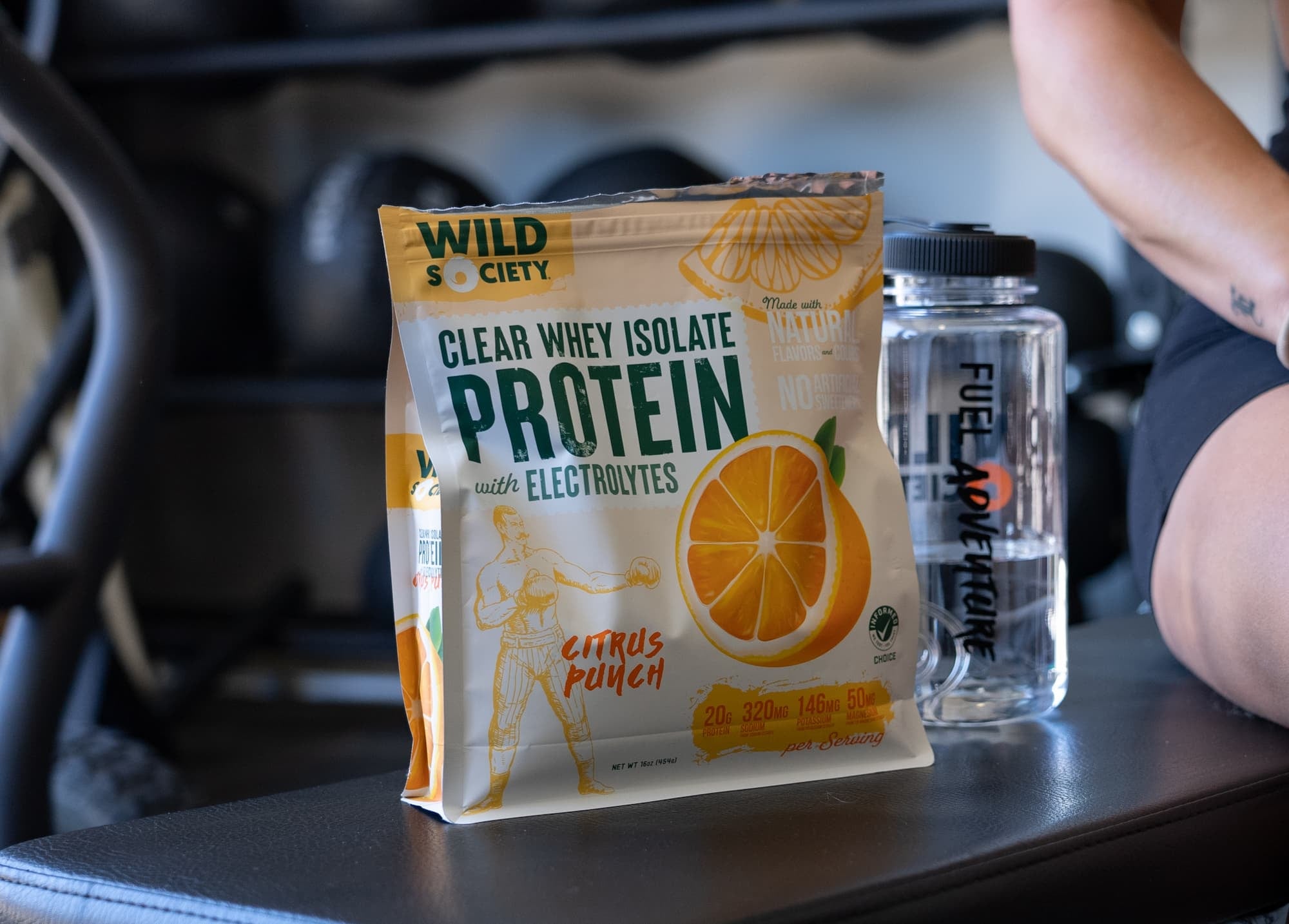
Clear Whey Isolate uses whey protein isolate in a fruit-flavored formula with added electrolytes. The Strawberry Coconut label identifies the protein, electrolyte salts, acids, flavoring, stevia, and other ingredients. Read the current flavor label for the exact formulation; a clear drink contains more than protein and water. That combination provides the light, fruit-flavored format of Clear Whey Isolate.
For someone who prefers a lighter drink, the published Strawberry Coconut serving provides 20g protein, 90 calories, and 0g added sugars. The formula's named Informed Sport directory entry provides a product-specific reference for checking certification information. Match that evidence with the flavor and preparation you want from Clear Whey Isolate.
Questions about choosing a clean protein powder
What is the purest cleanest protein powder?
There is no meaningful universal answer without defining “purest.” A single-ingredient powder may suit a minimal-recipe preference; a flavored formula may better suit everyday use. Neither description proves contaminant levels. Compare the protein source, full ingredients, label, and relevant evidence, then choose a formula that fits your needs rather than treating one marketing word as a score.
There is no universal safest or most unhealthy protein powder brand established by the word “clean.” Avoid products with ingredients you cannot tolerate or evidence that does not support the claims being made; do not assume one protein source is the number one choice to avoid for everyone.
Which protein powder has the least contaminants?
That requires comparable test results, including the same substances, units, and serving basis. A certification logo, organic description, or grass-fed claim alone cannot establish the ranking. Look for a relevant laboratory report and understand its scope. Results from one batch or product should not be generalized to every flavor, future batch, or competitor.
What is the healthiest protein powder to use?
Choose a source and formula that fit your protein needs, dietary restrictions, and overall diet. Review serving size and ingredients, then verify relevant testing information. A product that works well for someone else may not suit your allergies or preferred preparation. For WSN, compare the creamy Grass-Fed Whey format with the fruit-flavored Clear Whey format using their actual labels.
What to avoid in protein powder?
Avoid ingredients that conflict with your allergies or specific dietary instructions, unclear serving information, and claims that cannot be checked. Do not assume every gum, flavor, or sweetener is unsuitable simply because it is unfamiliar. Ask what each ingredient does and whether it fits your preferences. That makes the decision more useful than a universal list of forbidden ingredients.
Is it bad to drink protein powder every day?
Daily use can fit some routines when the amount and formula are appropriate, but it is not automatically necessary. Consider your food intake first and use the powder to fill a defined gap. If you follow a medical diet or have a relevant condition, review the product with your clinician. The label and your overall eating pattern matter more than frequency alone.
Why do doctors say no to protein powder?
Clinicians do not give one universal answer for every person and product. They may question an unnecessary supplement, a particular ingredient, or a mismatch with someone's health needs. The FDA's consumer guidance also distinguishes dietary supplements from premarket-approved medicines. Review individual needs rather than treating “supplement” as either a guarantee or a warning by itself.
For the manufacturing background, read how protein powder is made. Then make the buying decision concrete: choose your format, check the current label, and follow the product-specific evidence for Grass-Fed Whey or Clear Whey Isolate.
This article is for general informational purposes and isn't medical advice.