
Paleo Beef Jerky: How to Choose a Bag That Fits
Choose a paleo beef jerky by comparing the cut of meat, marinade, sweeteners and texture. See how a two-ingredient ribeye snack fits your preferences.

Plain beef is naturally gluten-free, but a finished bag of beef jerky can contain gluten from its marinade or seasonings. The quickest buying check is to find a gluten-free statement for the exact flavor, then read the full ingredient list. WSN Caveman Eats makes that check easy. Wild Society lists beef and sea salt as the ingredients and explicitly says the product contains no gluten.
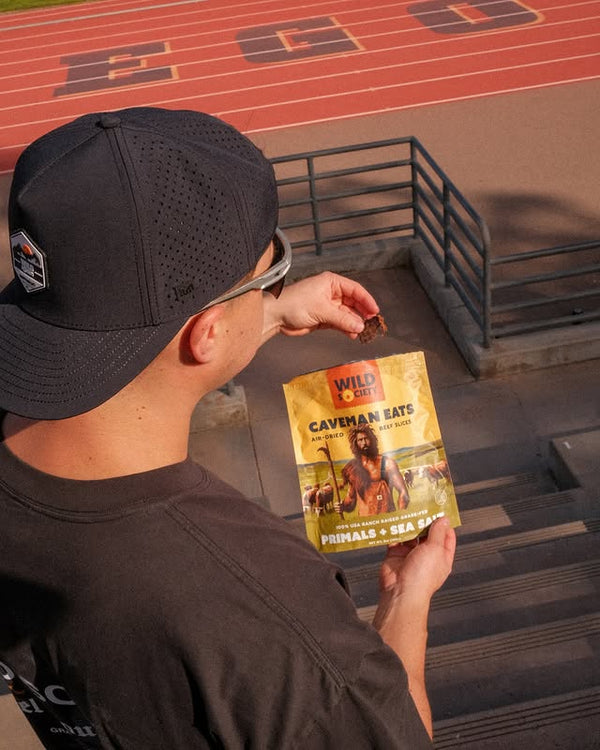
Two bags sitting next to each other can have different answers. One may be plain salted beef. Another from the same brand may have a teriyaki coating made with wheat-containing soy sauce. The cut of beef can be identical. What happens between slicing the meat and sealing the bag is what changes the decision. Caveman Eats identifies the exact beef-and-sea-salt flavor on the front of the bag.

95g protein per 5oz bag | Whole-cut grass-fed ribeye | Slow-cooked | Beef + sea salt
Start with the full product name. Take “original,” “peppered,” “teriyaki,” and “sweet heat” as different recipes until the manufacturer says otherwise. Even “original” describes a brand's original seasoning recipe, which may include a marinade. Photograph the front and back of the same bag if you're checking a product for someone else.
Turn to the ingredients and read what appears in parentheses after a sauce or seasoning. For example, a list might read “soy sauce (water, soybeans, wheat, salt).” Finding wheat there answers the question for that recipe. Soybeans themselves are legumes. It is the wheat in that particular sauce that matters. Caveman Eats takes a simpler route with whole-cut ribeye and sea salt, so there is no sauce recipe to decipher.

95g protein per 5oz bag | Whole-cut grass-fed ribeye | Slow-cooked | Beef + sea salt
Wheat, barley, and rye are relevant sources of gluten. The absence of a separate “Contains Wheat” line alone cannot answer a question about all three. Meat products also come under USDA inspection, and a separate allergen statement on a meat label is voluntary. The ingredient declaration and a finished-product gluten statement give you more information together.
USDA’s Food Safety and Inspection Service applies the FDA requirements for voluntary gluten-free claims to the meat products it regulates. The standard includes a limit of less than 20 parts per million of gluten and restrictions on ingredients. That is different from saying a laboratory found absolute zero, or that a third party certified the product. A shopper can rely on the manufacturer's actual claim without adding either of those stronger statements.
| Bag you are comparing | What the label tells you | What to do before buying |
|---|---|---|
| WSN Caveman Eats, grass-fed beef and sea salt | Two listed ingredients and an explicit no-gluten statement from WSN | Match the beef-and-sea-salt flavor to the “No gluten” statement on the Caveman Eats product page. |
| Teriyaki jerky listing wheat in its soy sauce | The marinade contains an identified wheat ingredient | Choose a different bag for a gluten-free purchase. |
| Peppered jerky with no gluten statement visible online | The flavor name identifies pepper, but gives little information about the finished product | Read the physical label or ask the manufacturer about that flavor. |
The two-ingredient Caveman recipe gives you a flavor you can verify at a glance.

95g protein per 5oz bag | Whole-cut grass-fed ribeye | Slow-cooked | Beef + sea salt
This is also why a photograph of the plain Caveman bag is useful when ordering. It shows exactly which beef-and-sea-salt product the claim describes.
Assuming that brown sauce always means gluten. Some marinades use ingredients that contain wheat and some use alternatives. Read the actual sauce ingredients. The words “tamari” or “soy sauce” on their own are a starting point for looking more closely, especially if an online listing cuts off the rest of the panel.
Using “no added sugar” as a shortcut. Sugar and gluten answer different questions. Unsweetened seasoning can contain wheat, and a sweetened recipe can qualify for a gluten-free claim. Caveman Eats lists 0g sugar and no gluten. Both facts are available directly, so you can check the one that matters to you.
Applying a brand-wide answer to a variety pack. An assortment can combine plain, barbecue, and teriyaki flavors. Read each inner bag or look for a statement that clearly applies to the whole assortment. If one person in the household eats gluten-free, choosing a single named flavor can make stocking the pantry easier.
Retailer filters are a handy way to find candidates. Before checkout, open the product’s own listing, select the intended flavor, and look for a readable ingredient panel. Compare the photos with the text description. If they appear to show different packages or flavors, getting a current answer from the manufacturer is worth more than a customer review from several years ago.
On Caveman Eats, the Nutrition Facts image includes an ingredient line beneath the panel: beef and sea salt. The product page separately addresses gluten. Reading those two pieces together gives a stronger answer than trying to infer gluten content from the amount of carbohydrate. Nutrition Facts rounds quantities for a different purpose. The carbohydrate line is not a gluten test. For a bag you can confidently tuck into a daypack, Caveman Eats identifies both its ingredients and its gluten status.

95g protein per 5oz bag | Whole-cut grass-fed ribeye | Slow-cooked | Beef + sea salt
At a deli counter, butcher shop or open snack bin, you may have a product name but no original bag. Ask to see the bulk package and how the slices are handled. Shared tongs, cutting surfaces and open containers are separate questions from the original recipe. If the details matter and the seller cannot confirm them, a sealed bag with a clear product statement is the easier purchase.
Beef is the starting point. The rest of the ingredient list is where two bags can differ. Imagine sharing a bag with someone who avoids gluten. You can show them the gluten statement on the Caveman Eats product page alongside the original bag. If you have already tipped several flavors into one bowl, the original bags can tell you what went into the mix, but a gluten-free label on just one bag cannot describe the whole bowl. Keep flavors separate if the label matters to someone sharing your snack.
The same reading habit works, but each is a separate finished product. Crispy, chewy and ground describe texture or preparation. None tells you what the seasoning contains. For a separate texture comparison, see beef chips versus beef jerky.
Read a reference to barley or malt from barley as a reason to check further. “Wheat” is not the only word that matters. If a bag has an apparent conflict between a gluten-free claim and the ingredient declaration, give the manufacturer the exact product, flavor and lot number. Choose a bag you can verify while you wait.
Use separate checks. The gluten statement identifies suitability for a gluten-free purchase. The protein number helps you choose between snacks afterward. WSN lists 95g protein per 5oz bag of Caveman Eats. For a savory snack with a crisp bite, a short ingredient list and a clear gluten statement, start with one bag of Caveman Eats.
This article is for general informational purposes and isn't medical advice.

Best Sellers
Use this text to share information about your collection with your customers.