
What Is a kcal vs Calorie? And Why Athletes Care
You’ve probably looked at a nutrition label and seen the word “Calories” with a capital C. Then maybe you opened a fitness app or read a science article and saw “kcal” instead. So… are they...

You don't realize how much you use your forearms until one of them starts hurting.
Suddenly, simple things become annoying. Gripping a dumbbell. Opening a jar. Carrying groceries. Even typing on a keyboard can feel uncomfortable.
Forearm muscle strains are surprisingly common among active adults, especially those who lift weights, play racquet sports, golf, climb, row, or spend long hours working at a computer.
The good news? Most forearm muscle strains improve with time, smart recovery, and a gradual return to activity.
Let's talk about what causes a forearm muscle strain, how to recover, and when it's safe to start training again.
A forearm muscle strain occurs when muscle fibers are stretched beyond their normal capacity or partially torn.
The forearm contains numerous muscles that help control:
A strain can happen suddenly during an intense movement or develop gradually from overuse.
Many people describe it as:
In mild cases, the discomfort may simply feel like unusually intense soreness. More significant strains can limit daily activities and training.
One of the most common causes is simply doing too much, too soon.
Examples include:
Your muscles adapt over time, but they need a chance to catch up.
Certain exercises place significant stress on the forearm muscles.
Common culprits include:
If your forearms aren't accustomed to the workload, strain becomes more likely.
Pickleball, tennis, and racquetball have exploded in popularity—and so have forearm injuries.
Repeated gripping and swinging can overload muscles and tendons, especially if activity levels increase quickly.
Not every forearm strain starts in the gym.
Activities like:
can also contribute to muscle overload.
Symptoms vary depending on severity, but common signs include:
Many people notice symptoms most when:
This doesn't necessarily mean complete rest.
It does mean avoiding movements that continue to irritate the injury.
Think:
rather than:
Gentle movement often helps recovery more than complete inactivity.
During the first 24–48 hours, ice may help reduce discomfort and swelling.
Apply for:
After the initial phase, many people find gentle movement and heat more helpful.
One of the biggest mistakes people make is becoming completely sedentary.
Walking, light cardio, and lower-body training can help maintain circulation and support recovery.
Your body heals best when it continues receiving nutrients and blood flow.
Recovery isn't just about what happens in the gym.
Your body needs:
to repair damaged tissue.
This is especially important if you're still training other parts of your body.
Muscle tissue is constantly being repaired and rebuilt.
When you're recovering from a strain, your protein needs may actually increase.
Aim to include quality protein sources throughout the day.
Options include:
Wild Society Nutrition Grass-Fed Whey Protein
A high-quality whey protein can make it easier to consistently hit your protein goals during recovery, especially when appetite or schedule becomes a challenge.

Hydration is often overlooked during injury recovery.
Water supports:
If you're sweating regularly or training through warmer weather, replacing electrolytes can also help support recovery.
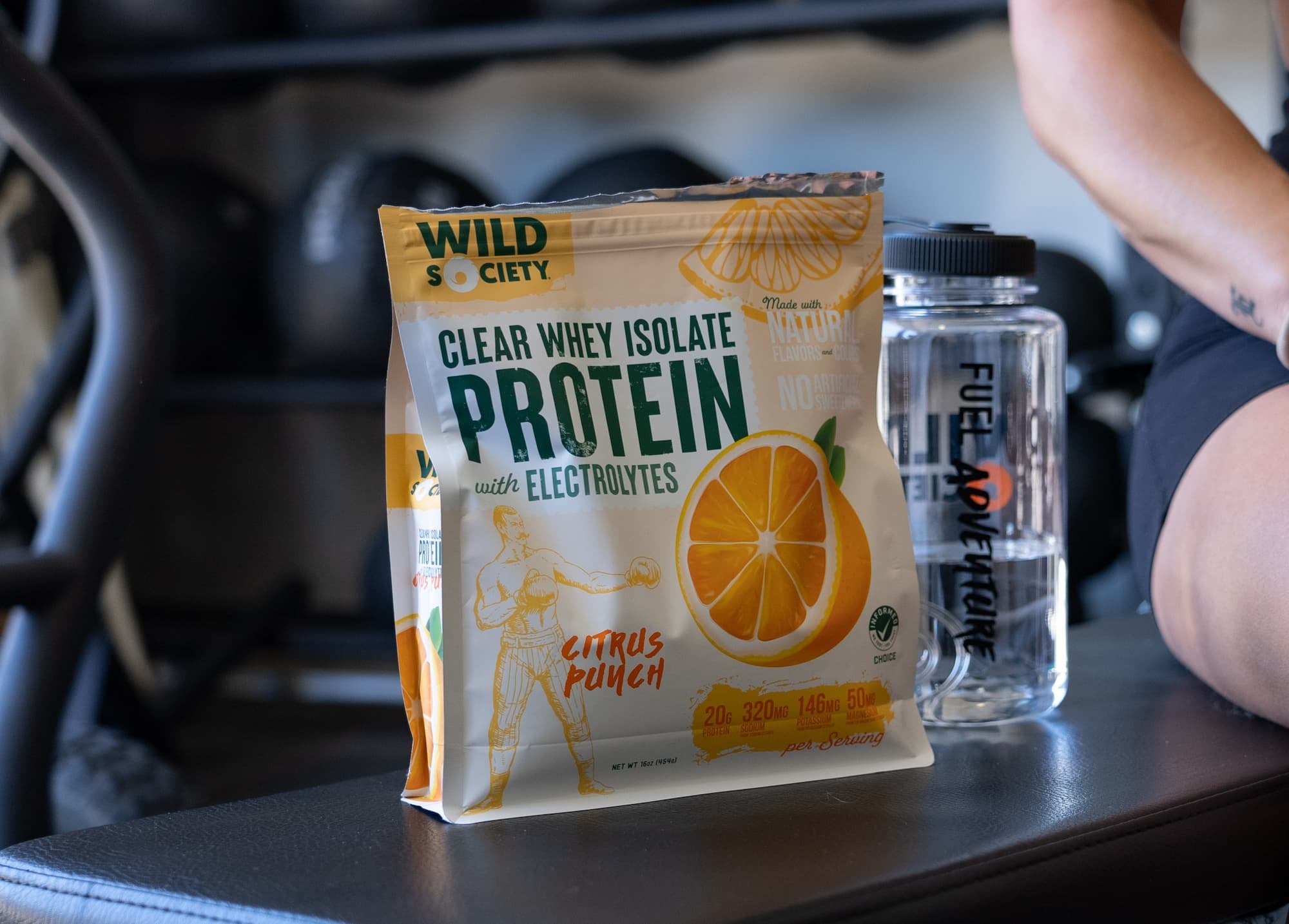
Wild Society Nutrition Protein + Hydration
With 20 grams of protein and added electrolytes, it's an easy option for supporting recovery after workouts or active days.

This is the question everyone asks.
The answer depends on symptom severity, but a good rule of thumb is:
You should be able to:
before returning to heavier training.
Most people return too aggressively.
Instead:
Think of your first week back as a test, not a personal record attempt.
Progressive loading is key.
For example:
If pain increases, slow down.
Even if your forearm feels better, excessive grip work can quickly re-aggravate symptoms.
Temporarily reduce:
Then gradually rebuild tolerance.
Consider seeking evaluation if:
These symptoms may indicate something more significant than a mild muscle strain.
Mild strains often improve within a few weeks, while more significant injuries may require several weeks to several months for full recovery.
In many cases, yes. Lower-body training, walking, cycling, and modified workouts may still be possible. Avoid movements that worsen symptoms.
Gentle mobility work may help, but aggressive stretching early in recovery can sometimes make symptoms worse.
Ice may be helpful during the first 24–48 hours. Later in recovery, many people find gentle heat and movement more beneficial.
Protein provides the building blocks needed for muscle repair and recovery, making adequate intake an important part of the healing process.
A forearm muscle strain can be frustrating, especially when it interferes with training and daily activities.
The good news is that most strains respond well to a combination of smart activity modification, progressive return to exercise, adequate protein intake, hydration, and patience.
The goal isn't simply to get rid of pain. It's to return stronger, more resilient, and better prepared to handle the demands of training.
Take recovery seriously, support your body with quality nutrition, and give yourself the time needed to heal properly.
Photo by Victor Freitas on Unsplash

Best Sellers
Use this text to share information about your collection with your customers.